
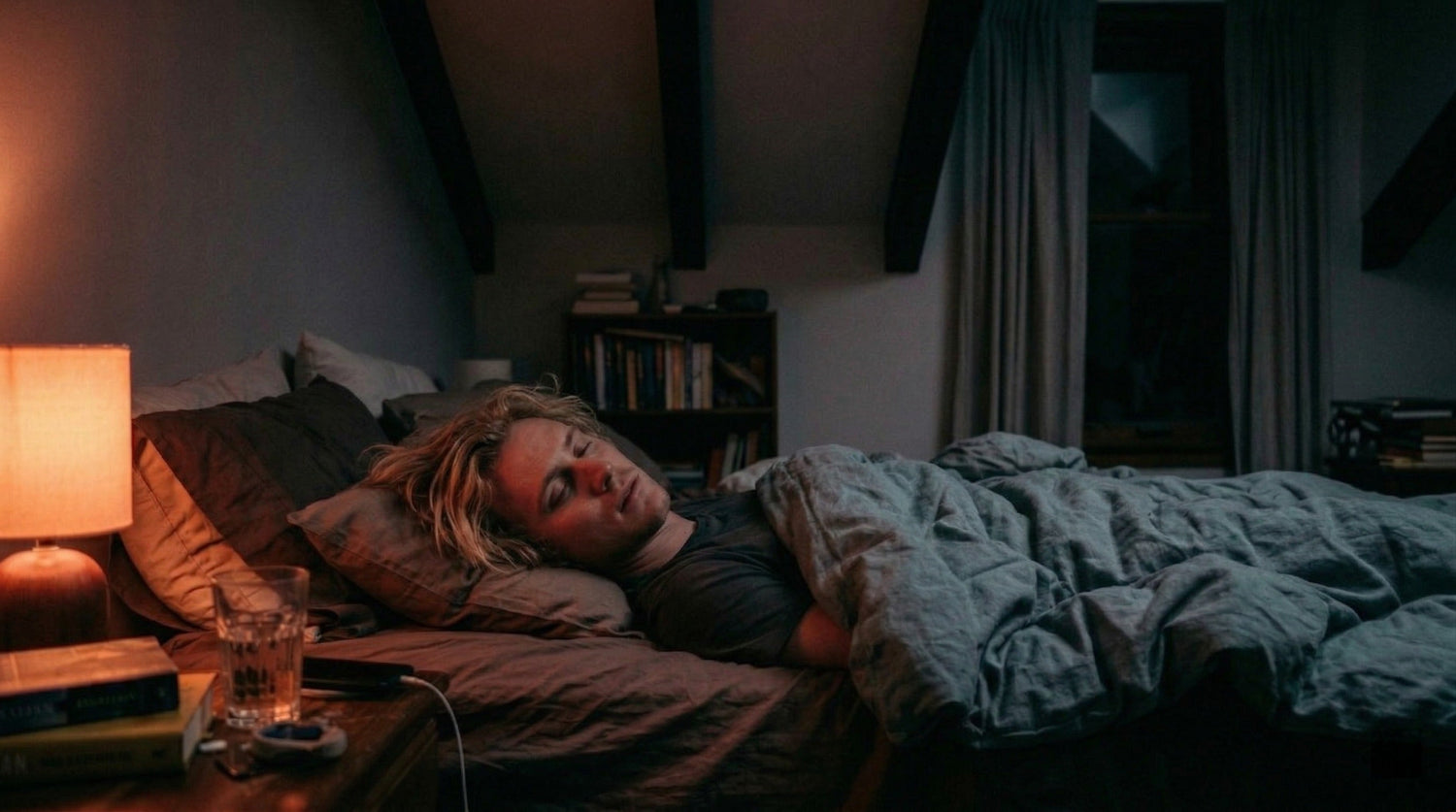
You fall asleep fine. Then, sometime around 3am, you're wide awake. Maybe you looked at the clock. Maybe you didn't need to. Your body already knows. You do the maths on how much sleep you'll get if you fall back asleep right now, and the maths isn't good.


This happens to a lot of people. And it's not random.
It's probably not anxiety. It's your body clock.
Most people who wake at 3am assume it's stress. Stress can play a role. But the reason this happens at 3am specifically, not 1am or 5am, comes down to something biological that runs on a very predictable schedule.
Your body produces cortisol on a rhythm. It's part of your circadian system. That's the same internal clock that controls when you feel sleepy and when you feel alert. Cortisol hits its lowest point around midnight. Then, in the early hours of the morning, it begins to climb. This rise starts earlier than most people think. By 3am to 4am, cortisol is already building. It's a built-in system your body uses to prepare you for waking.
Under the right conditions, this doesn't bother you. You sleep through it, transition into lighter sleep, and wake closer to your alarm. But when your cortisol rhythm is shifted, or when your sleep is already shallow, that early rise is enough to push you fully awake.
What actually happens at 3am
The first half of the night is dominated by deep, slow-wave sleep. The physically restorative stages. By 3am, most of that deep sleep is done. What remains is lighter sleep and more REM. Your body has done the heavy work.
Lighter sleep is easier to interrupt. A noise, a thought, a cortisol spike. Any of these can pull you out. If your cortisol is rising on a slightly early schedule, it catches you in that lighter window and you surface.
The harder part is what happens next.
If your cortisol is elevated and your melatonin has already dropped, your body is reading the situation as "morning." You feel alert. Your brain starts running. Going back to sleep feels impossible. Not because something is wrong with you, but because your body is genuinely in a semi-awake hormonal state.
There's another piece to this. Sleep runs in roughly 90-minute cycles. After a full night, you're naturally in a light phase as each cycle ends. If your sleep timing is slightly misaligned with your circadian rhythm, that fourth or fifth cycle ends right around 3am to 4am, meeting the cortisol rise at exactly the wrong moment.
Two systems pushing in the same direction at the same time. That's why it's consistent.
Why your evening matters more than your bedtime
Here's the part most people don't expect.
Your cortisol rhythm doesn't start at 3am. It runs all day. And what you do in the hours before bed directly affects where that rhythm sits overnight.
Cortisol and melatonin work in opposition. When melatonin rises in the evening, cortisol falls. When melatonin is delayed or suppressed, cortisol doesn't fall as far as it should. That leaves it starting from a higher baseline overnight, which means the 3am rise begins earlier and pushes harder.
What suppresses melatonin most reliably? Blue light after dark.
Your eyes contain receptors specifically sensitive to short-wavelength blue light. When those receptors fire, from an overhead light, a phone screen, or a laptop, they send a signal to your brain that says it's still daytime. Melatonin production slows or stops.
If you're in that light until 10pm or 11pm, your melatonin onset is delayed by one to three hours. Your body's hormonal timeline shifts. And somewhere downstream, at 3am, you wake up.
The light thing nobody tells you about
The advice you've probably heard is to put your phone away 30 minutes before bed. That helps at the margins. But it misses the actual window.
Melatonin suppression isn't caused by the 30 minutes before you get into bed. It accumulates over two to three hours of light exposure in the evening. By the time you put the phone down at 10:45pm, the effect on that night's melatonin is already built in.
The lights in your living room, your kitchen, your bathroom. The overhead LEDs you switch on at sunset and run until you close your eyes. Those are the inputs your circadian system is using to set its clock.
Modern LED lighting skews blue. Even bulbs that look warm still emit more blue light than a candle or a fireplace. Your brain doesn't distinguish between a bright screen and a bright overhead fitting. Both register as daytime.
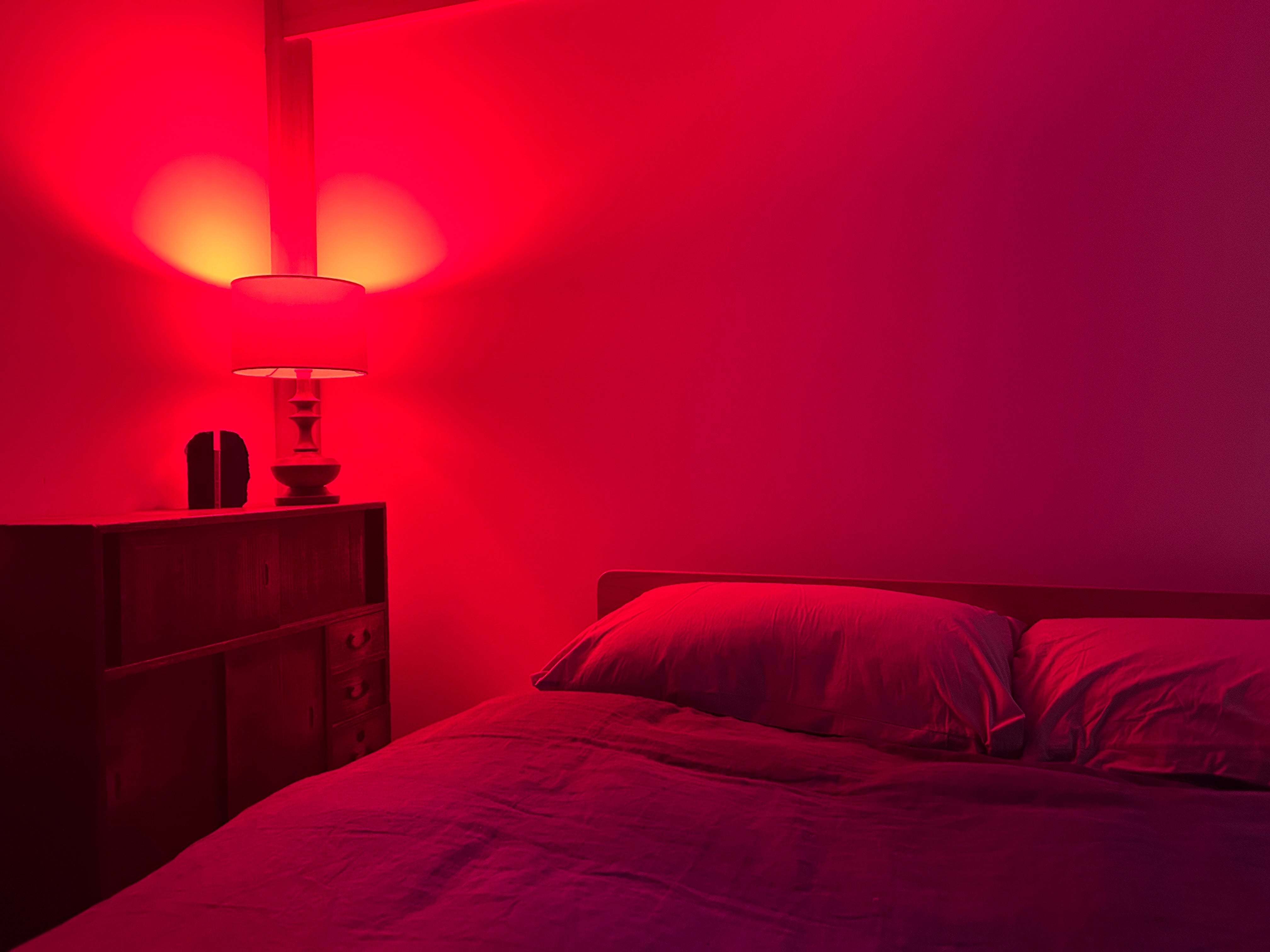
Switching to amber or red-spectrum light in the evening removes the blue wavelengths from your environment. Your eyes stop receiving the daytime signal. Melatonin rises closer to when it should. Your cortisol curve has a better chance of sitting where it needs to overnight.
This is the lever most people haven't tried. Not because it's ineffective. The circadian biology here is well established. But it doesn't come in a pill and there's no major industry behind it.
What you can do tonight
You don't need to redesign your bedroom.
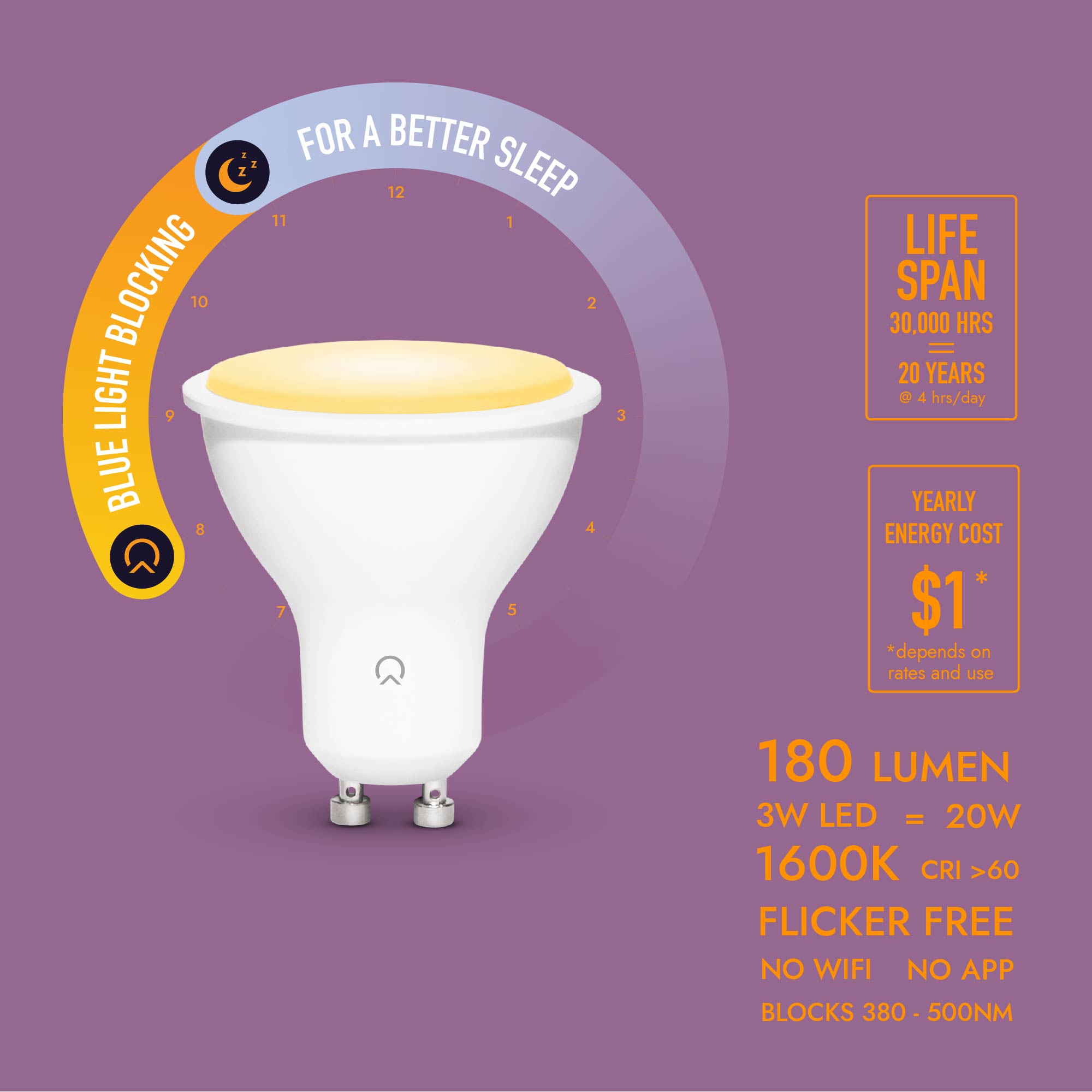
Start in the room where you spend the most time after sunset. Usually the living room. Swap the overhead bulb for an Amber Glow Sleep Bulb. Run it from sunset until you go to bed.
If your bathroom has a bright white light above the mirror, that's the second switch worth making. The bathroom visit at 10pm or 11pm is often the biggest light hit of the night. Full-spectrum, overhead, directly at eye level.
Some people notice a difference within a few nights. Others take a week or two as their rhythm recalibrates. The biology isn't instant, but it's consistent.
Waking at 3am is a signal. It's not random, and it's not permanent. Your body is running a system. Evening light is one of the inputs that most people haven't looked at yet.

Leave a comment
This site is protected by hCaptcha and the hCaptcha Privacy Policy and Terms of Service apply.