

Best Sellers
18 products
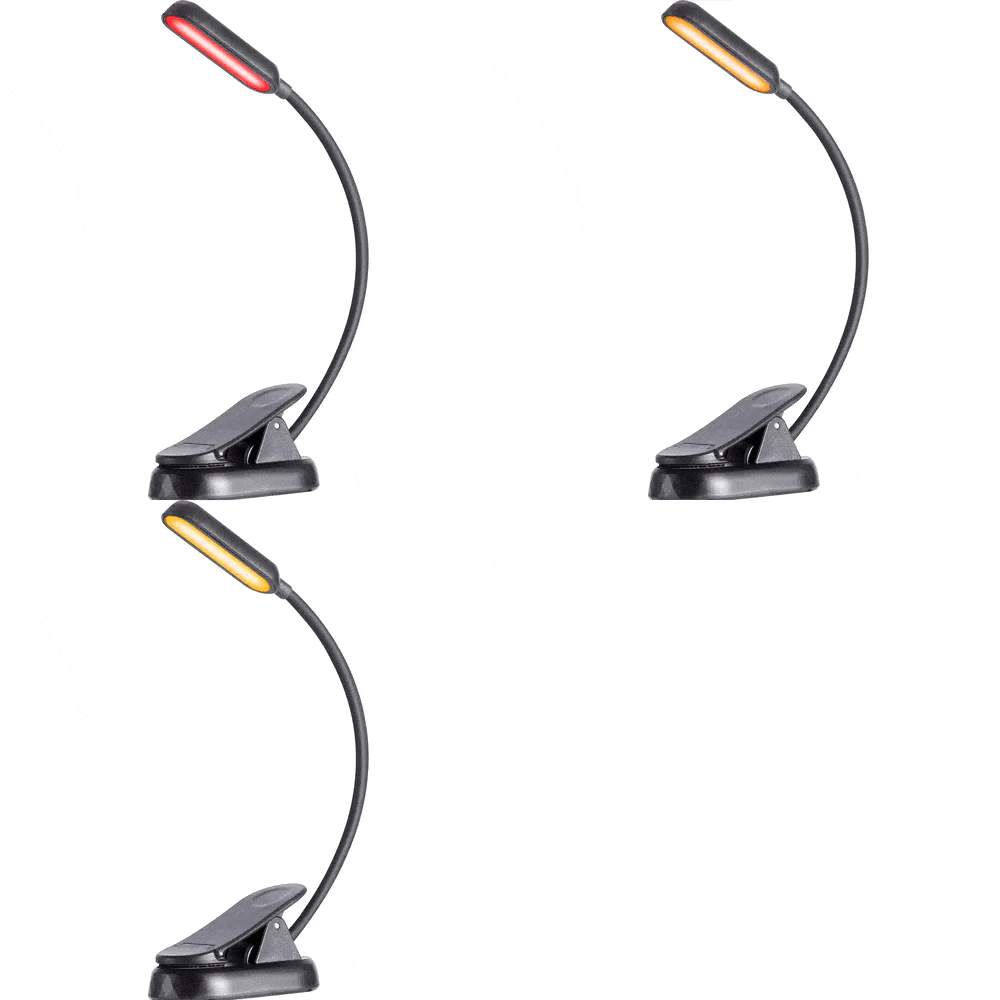
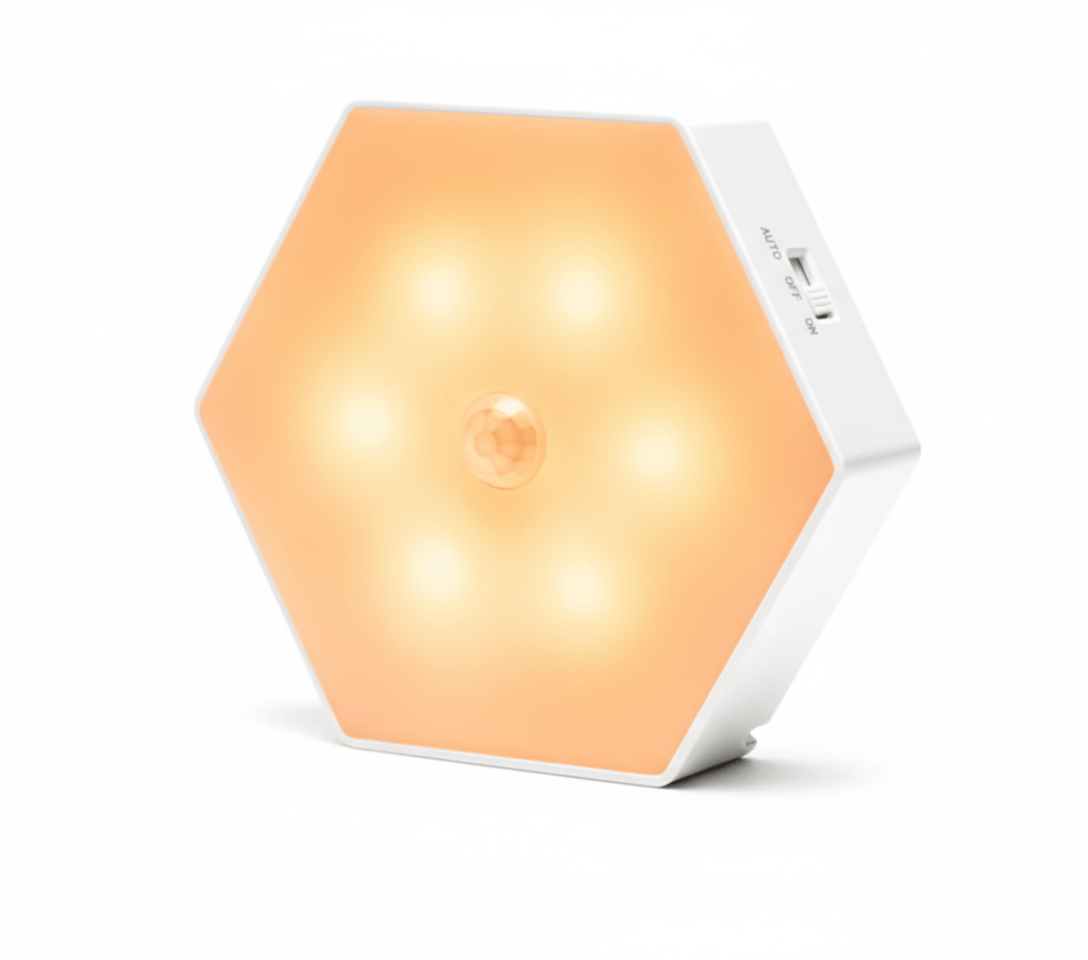
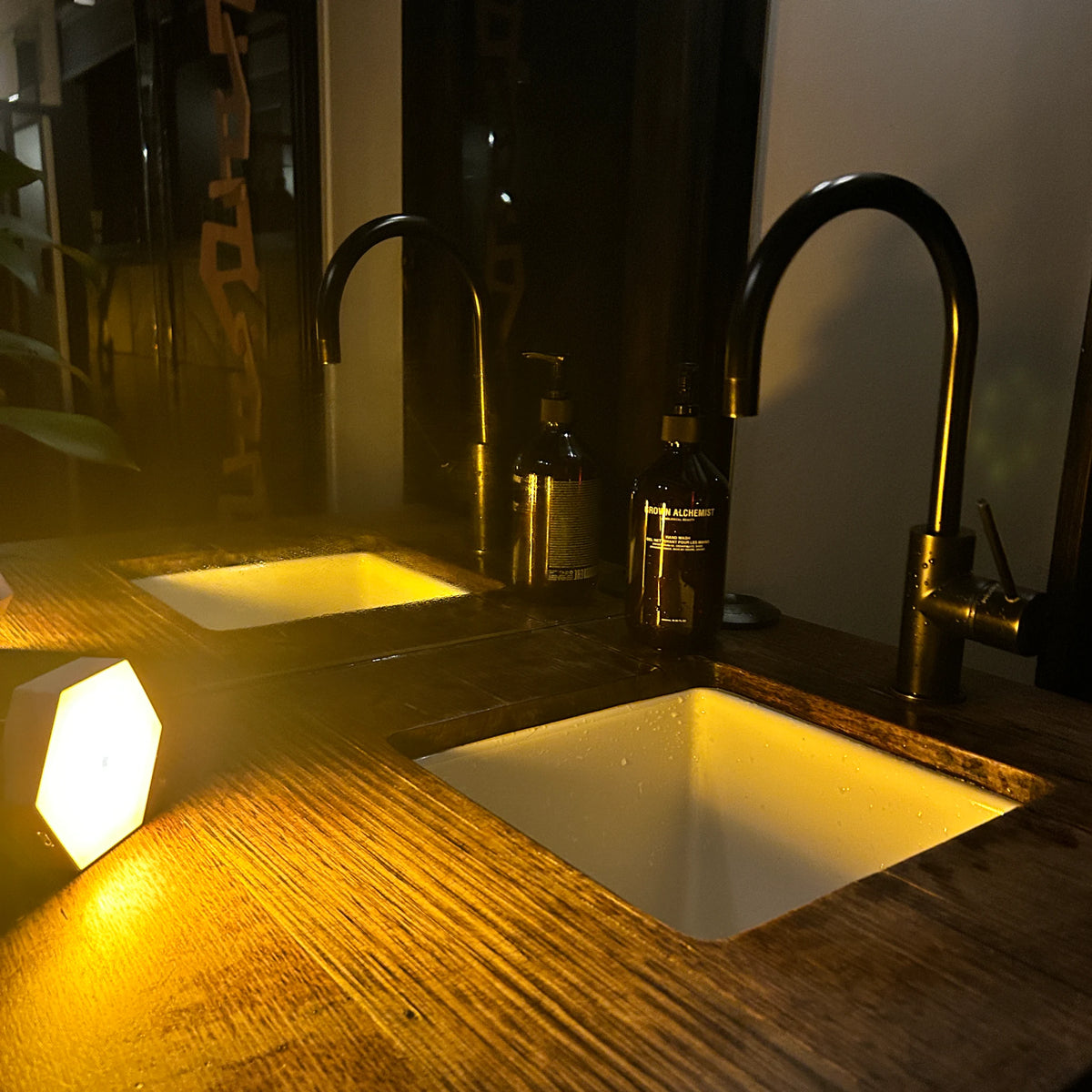
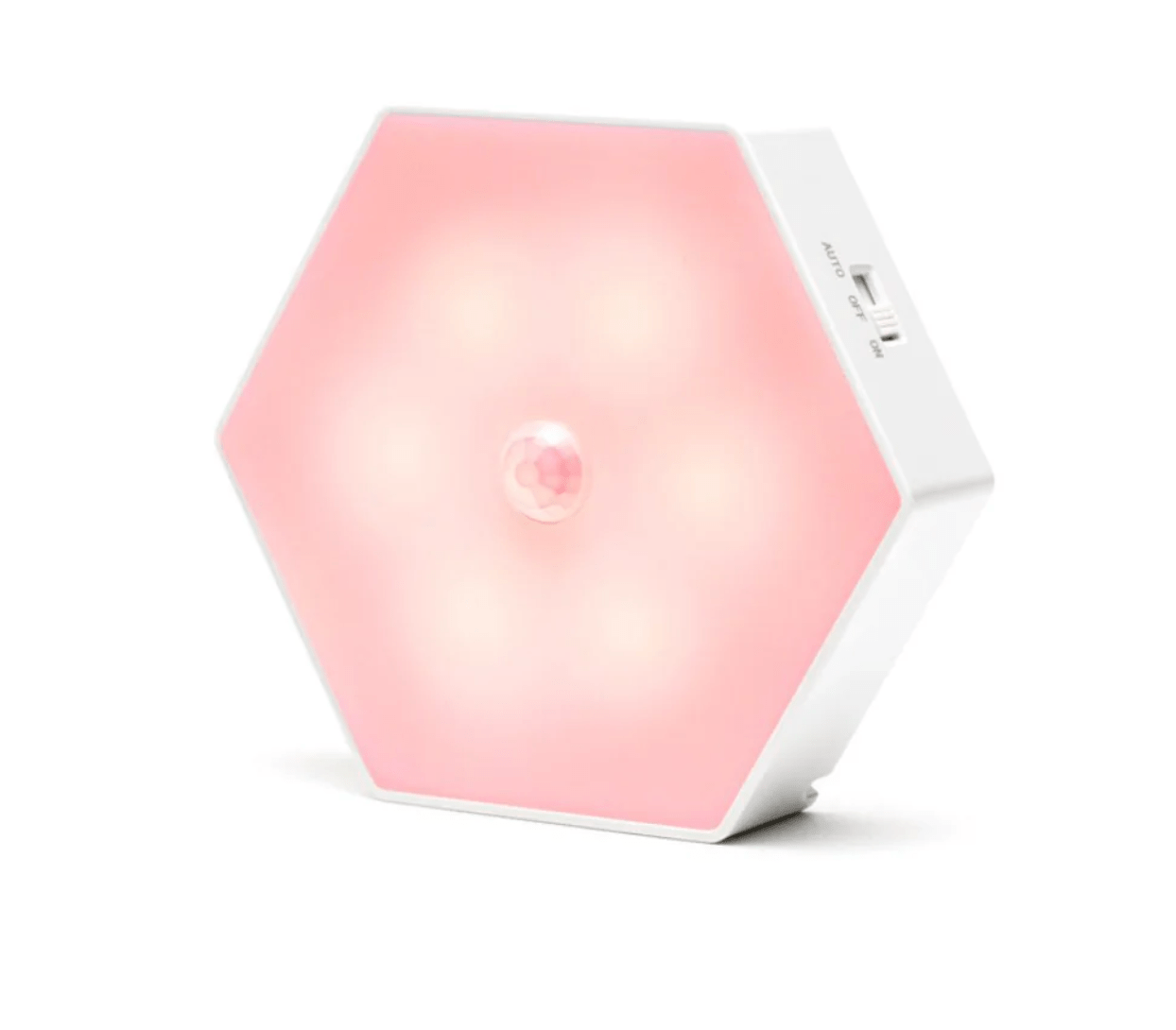

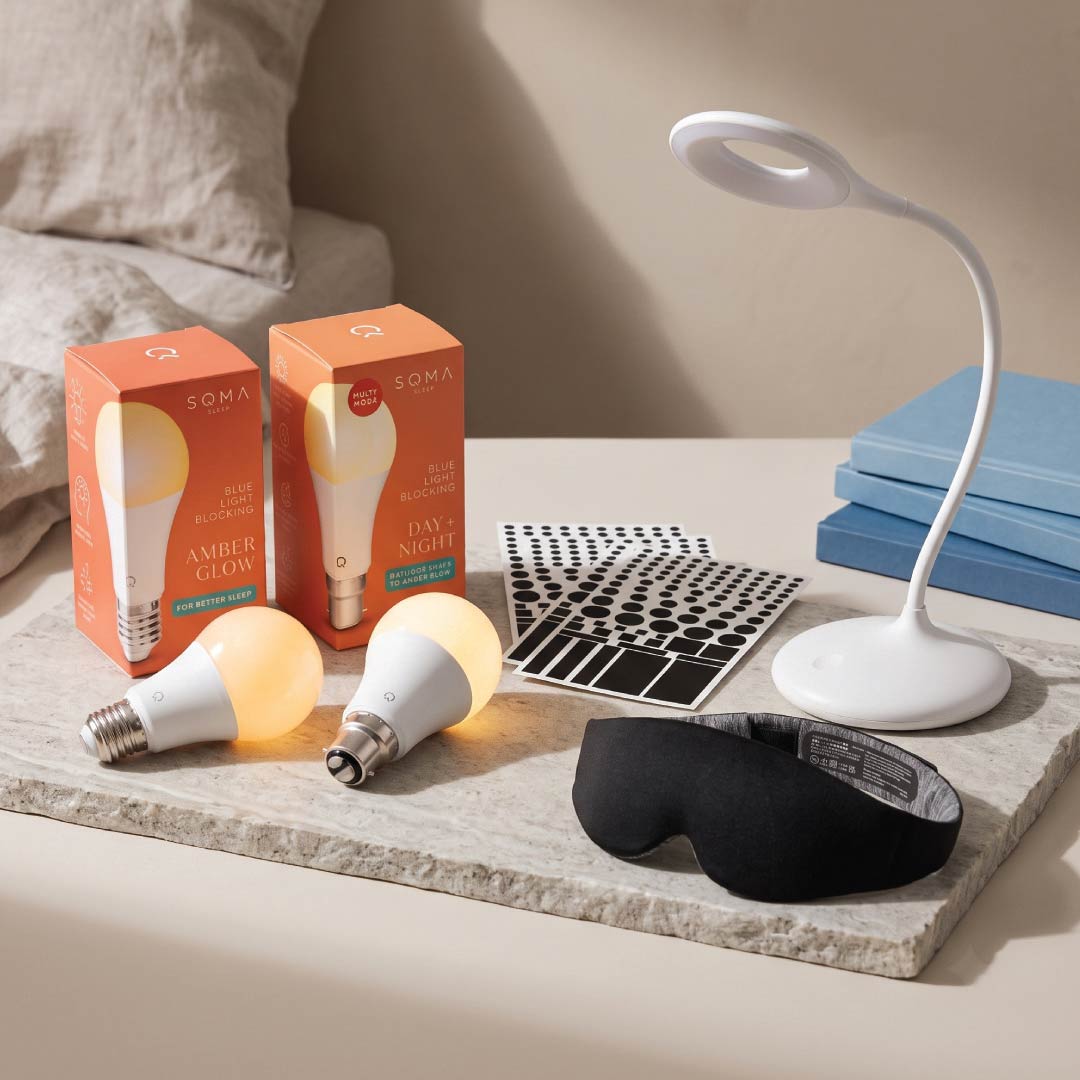
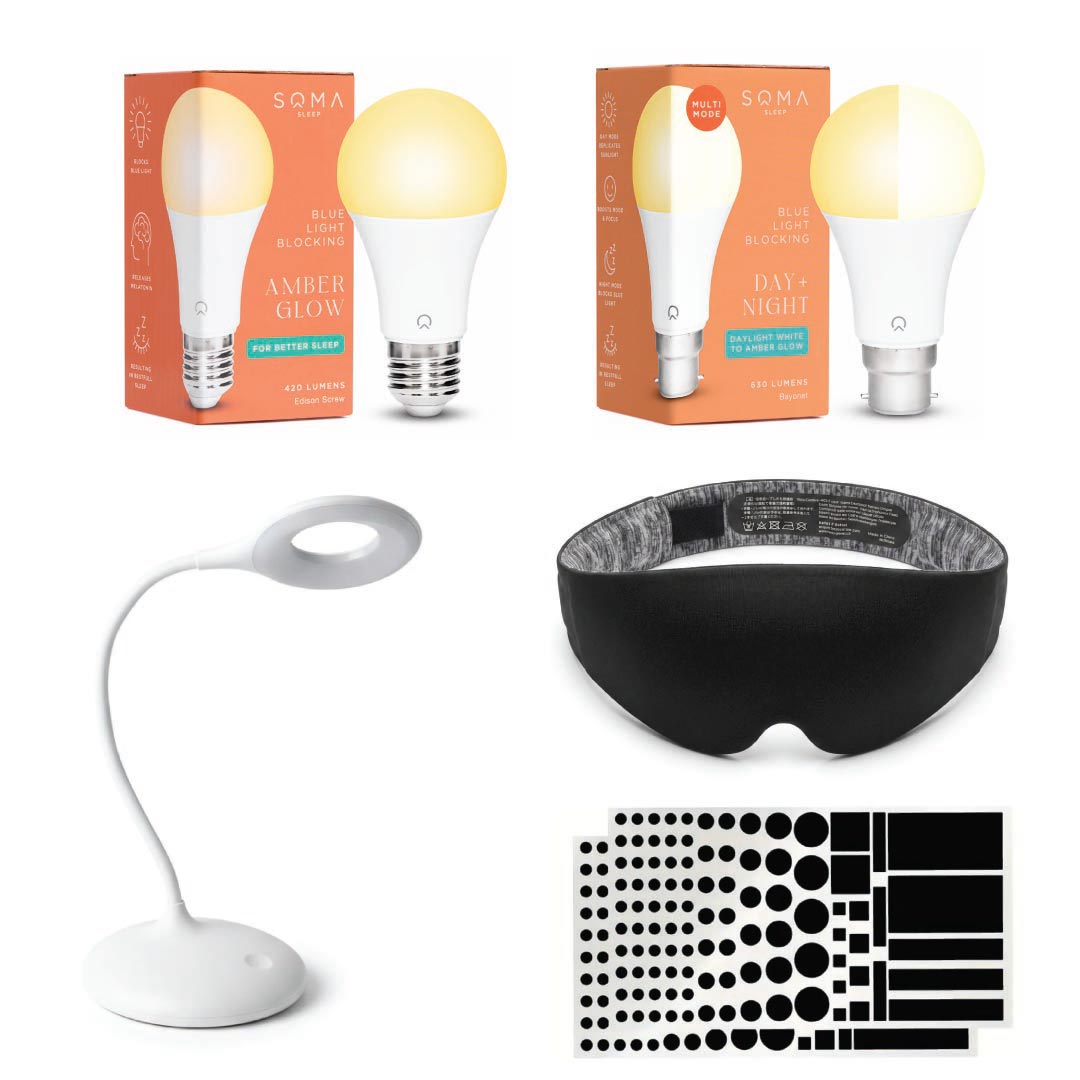
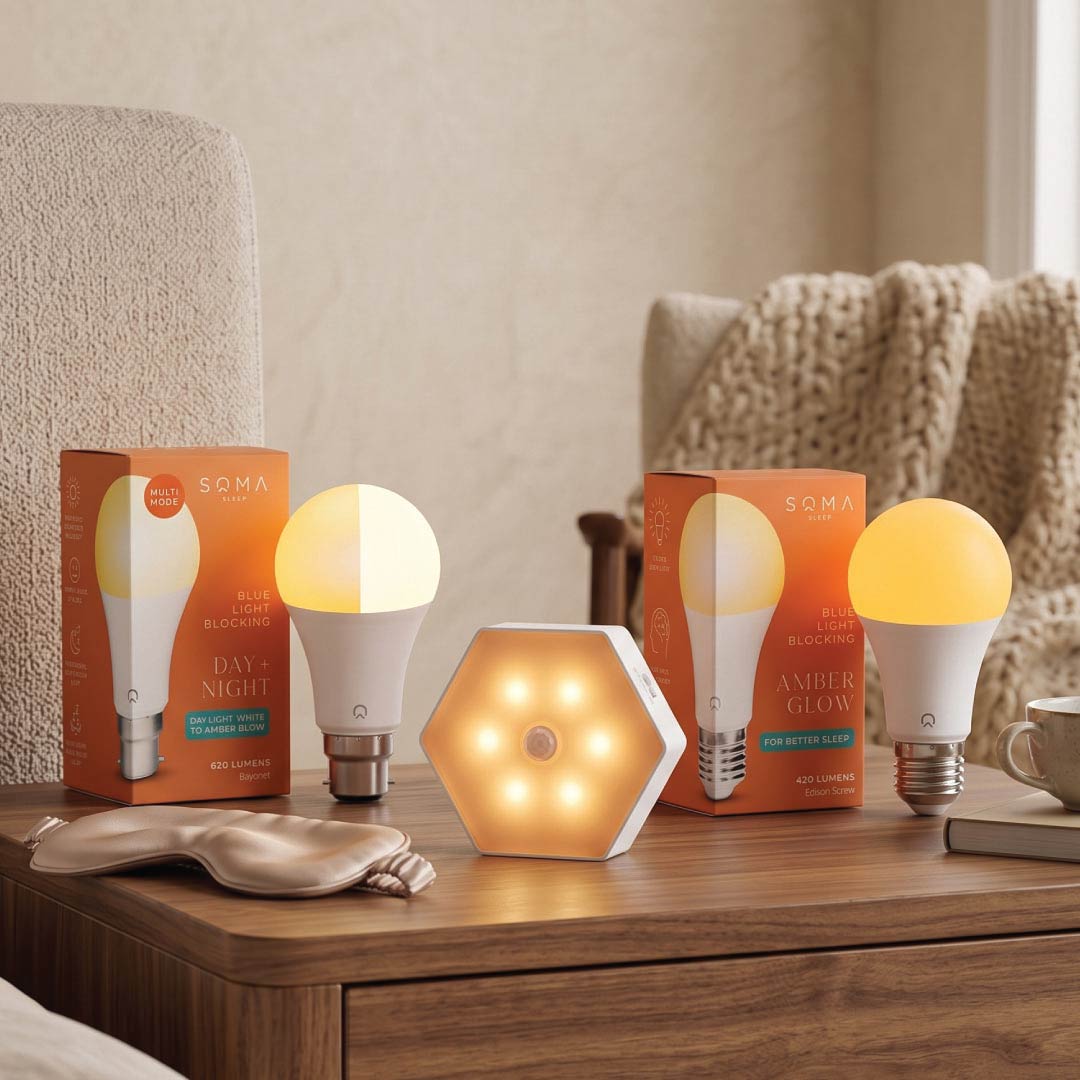
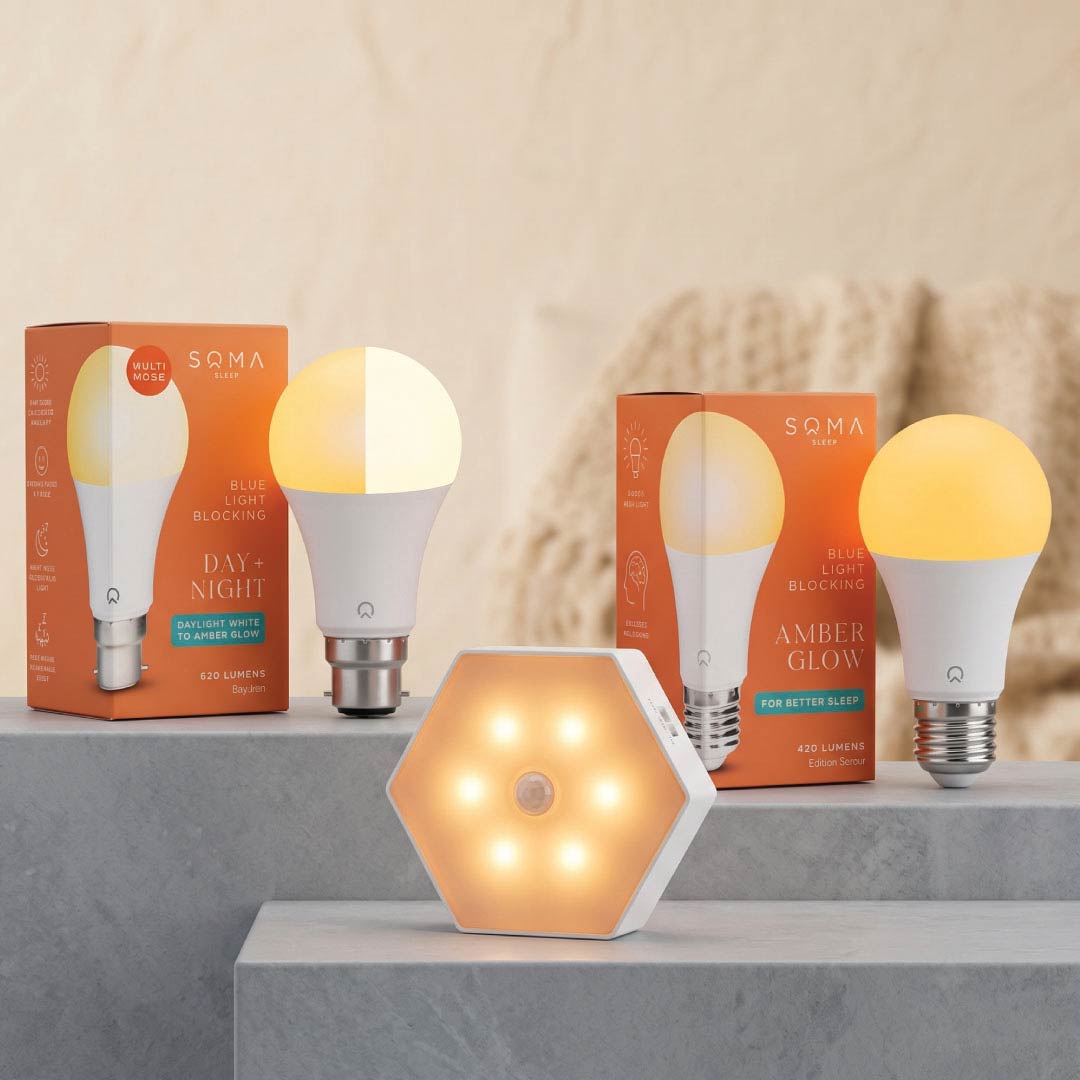
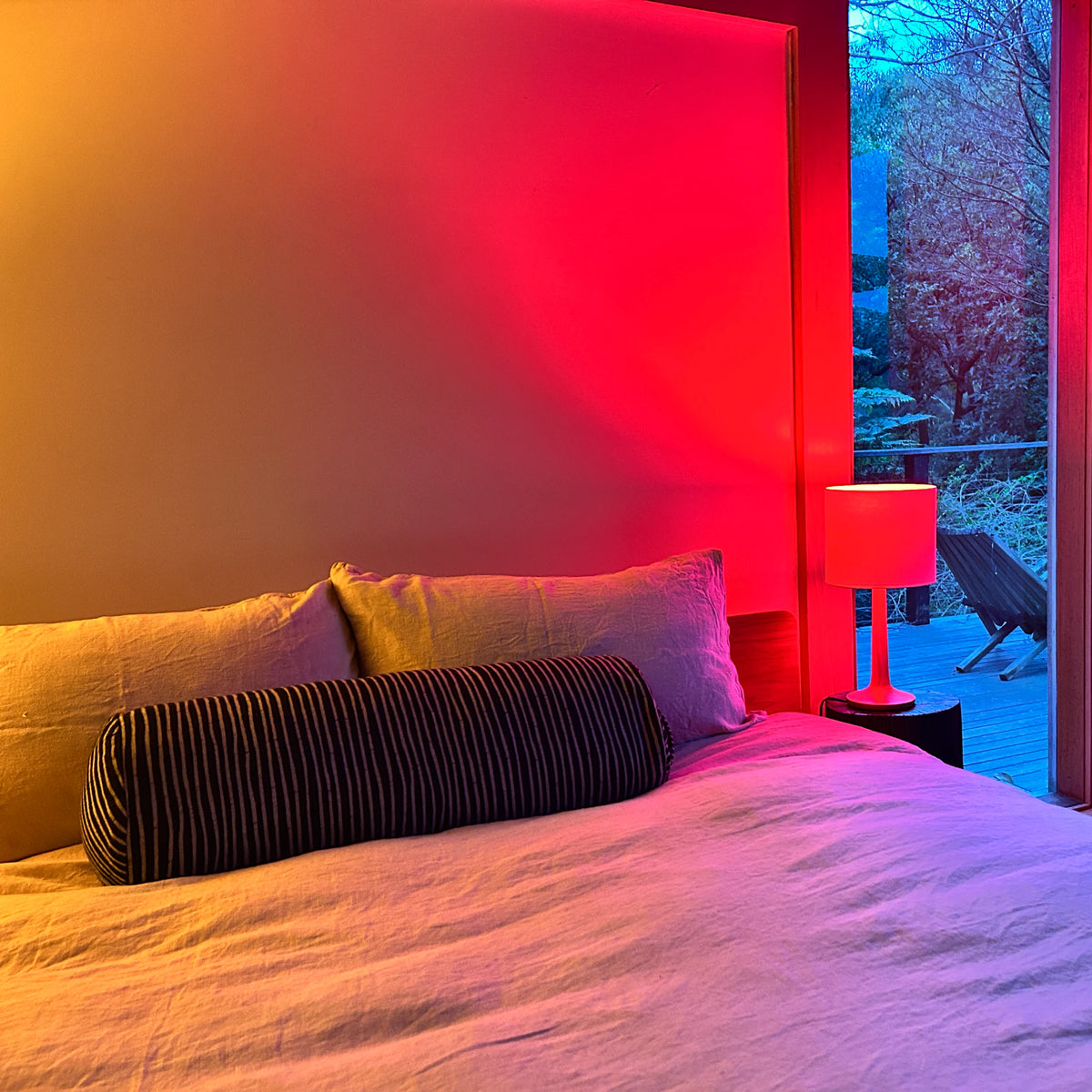
Why standard bulbs keep you awake
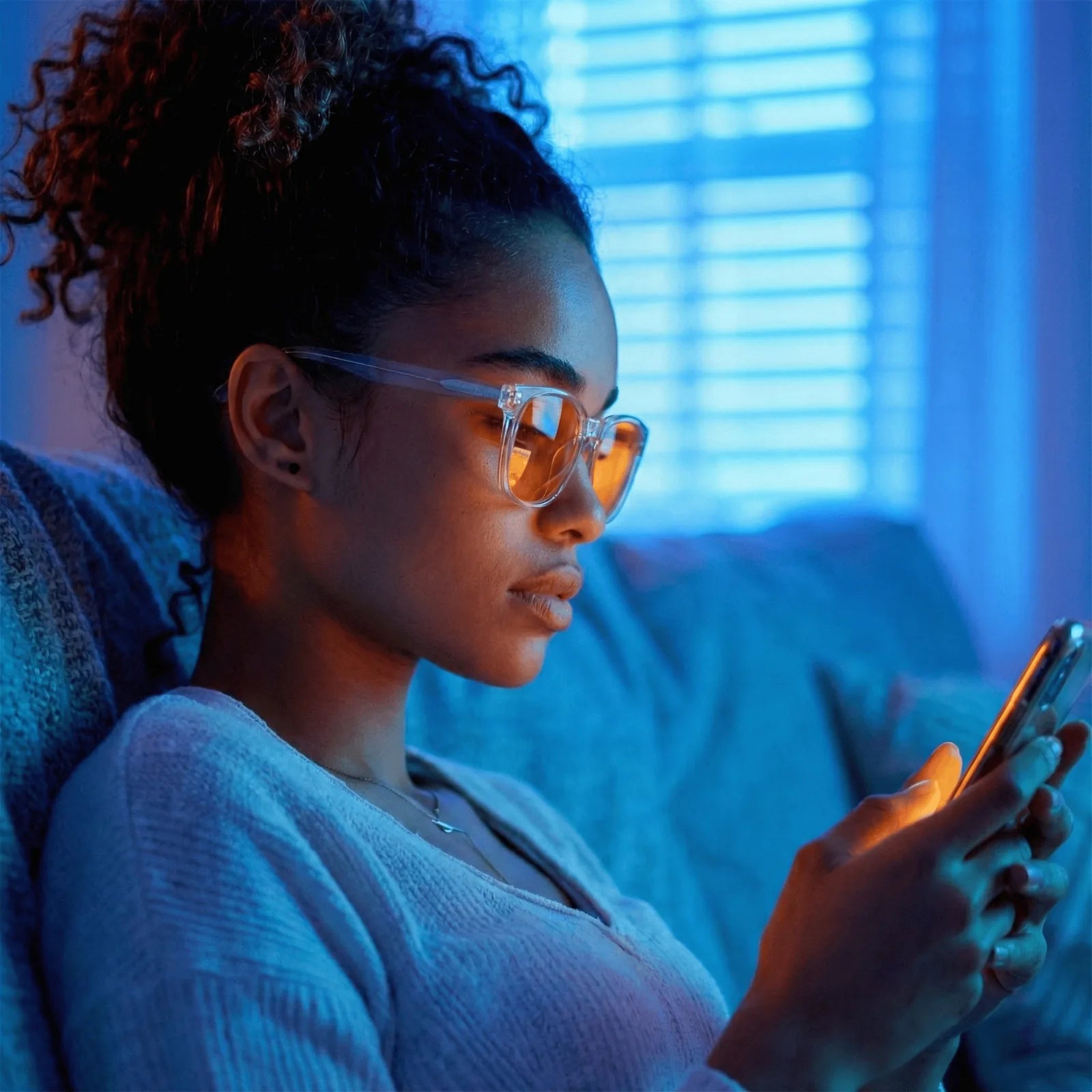
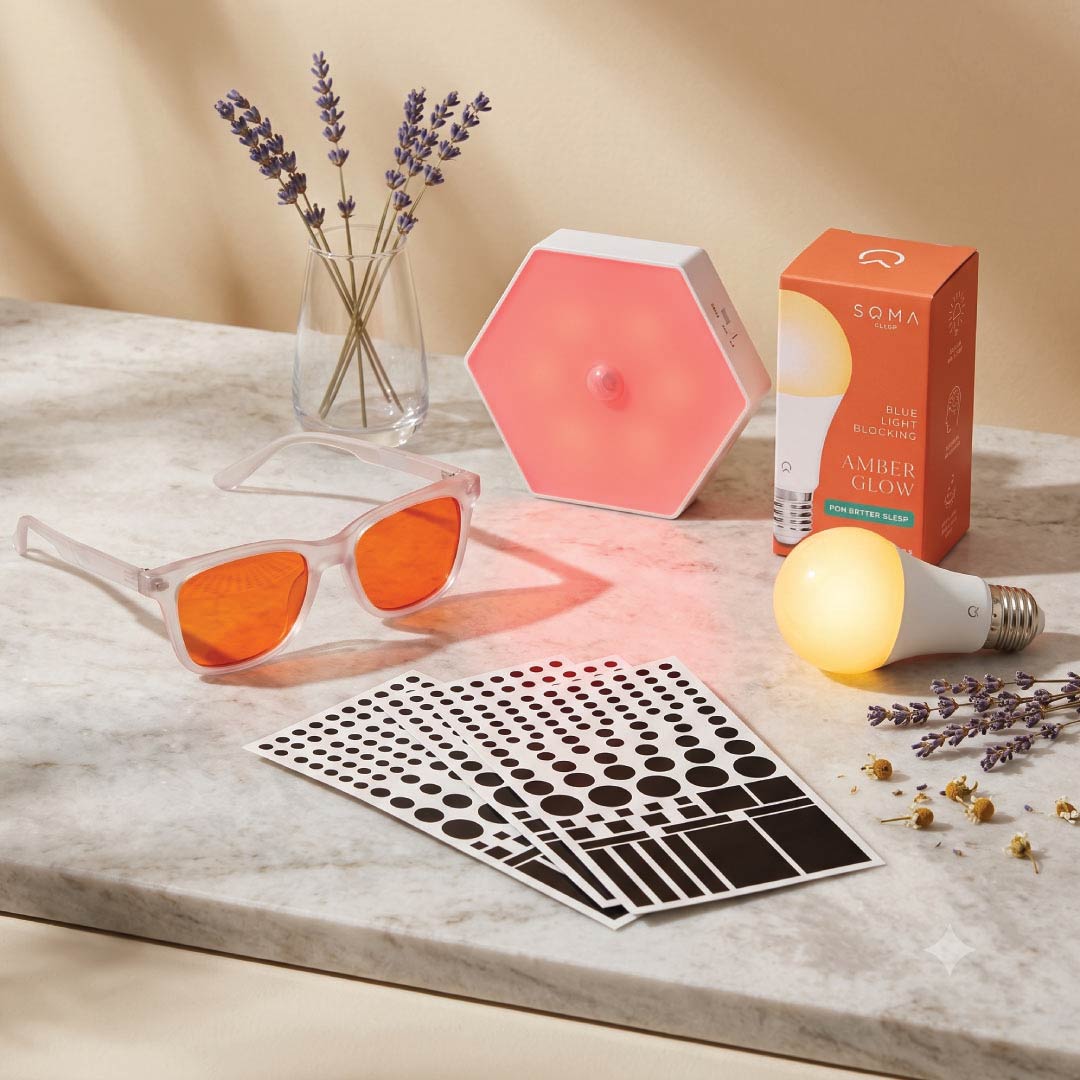
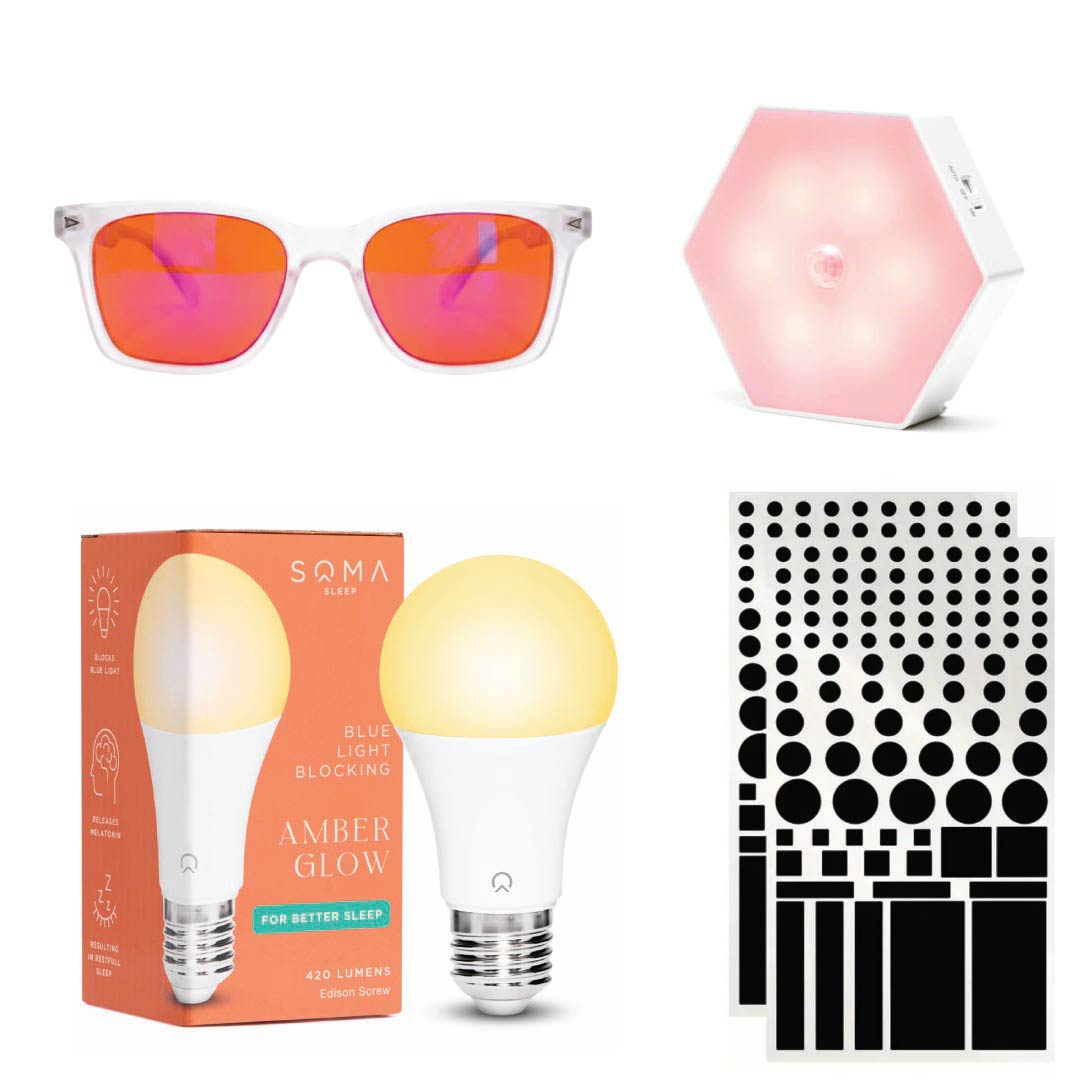
Most globes, including the ones sold as warm white, still emit real amounts of blue light. Even dimmed. Even behind a shade. The colour looks warm, but the spectrum often isn't.
Blue light blocking bulbs are engineered to eliminate the 400 to 500nm range, not just reduce it. The warm glow they give off is what's left once the blue is gone, and that's the part that matters for melatonin.
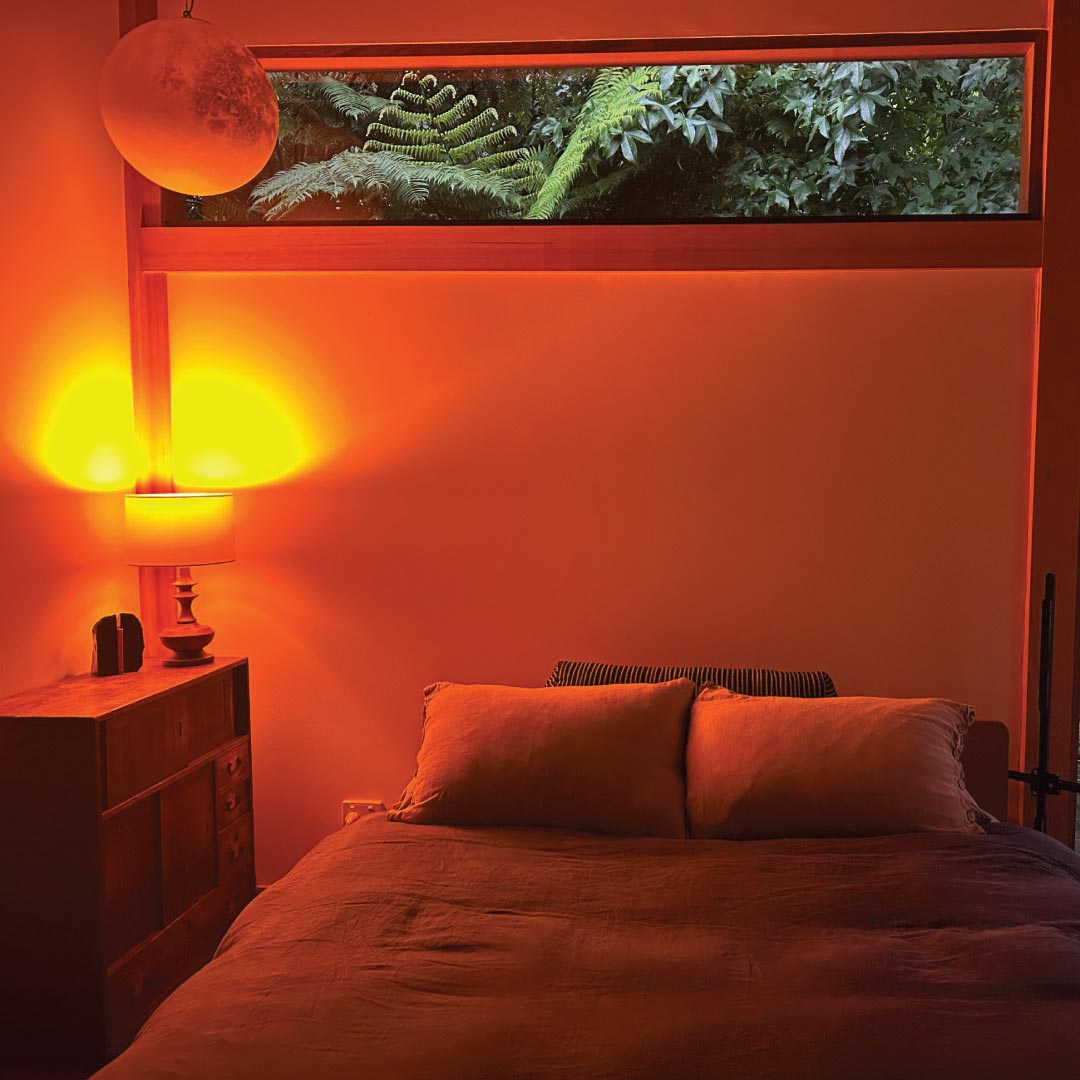
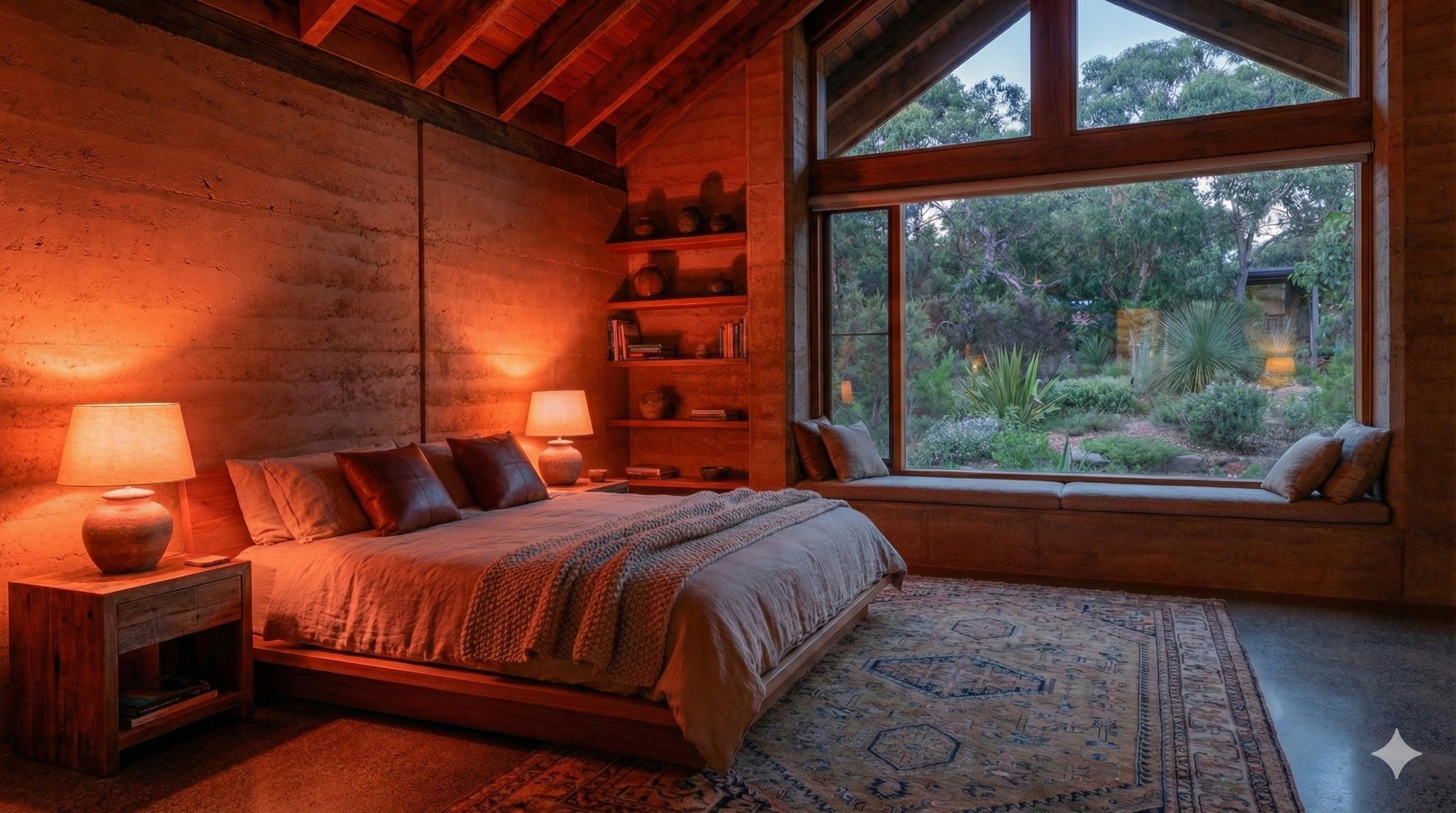
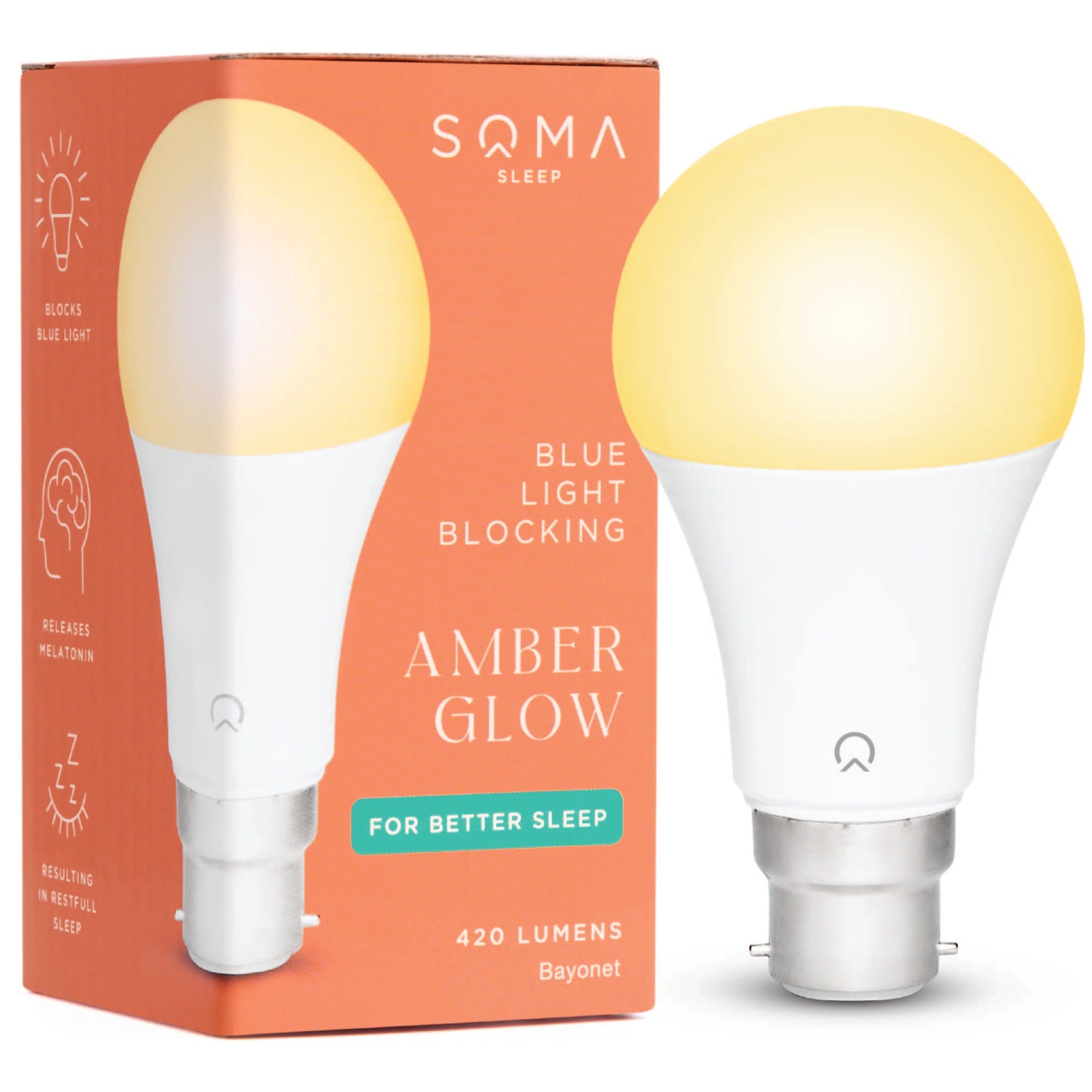
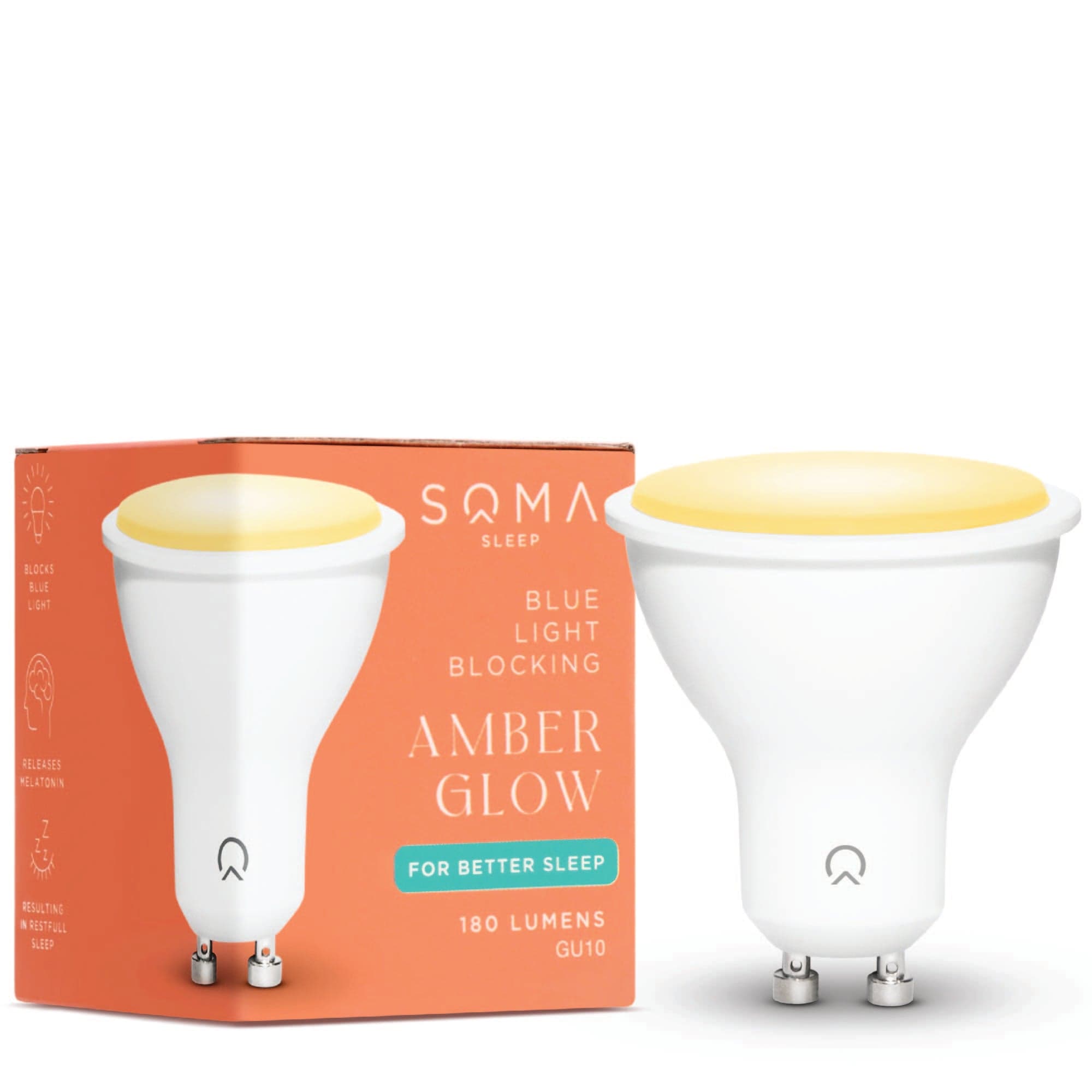
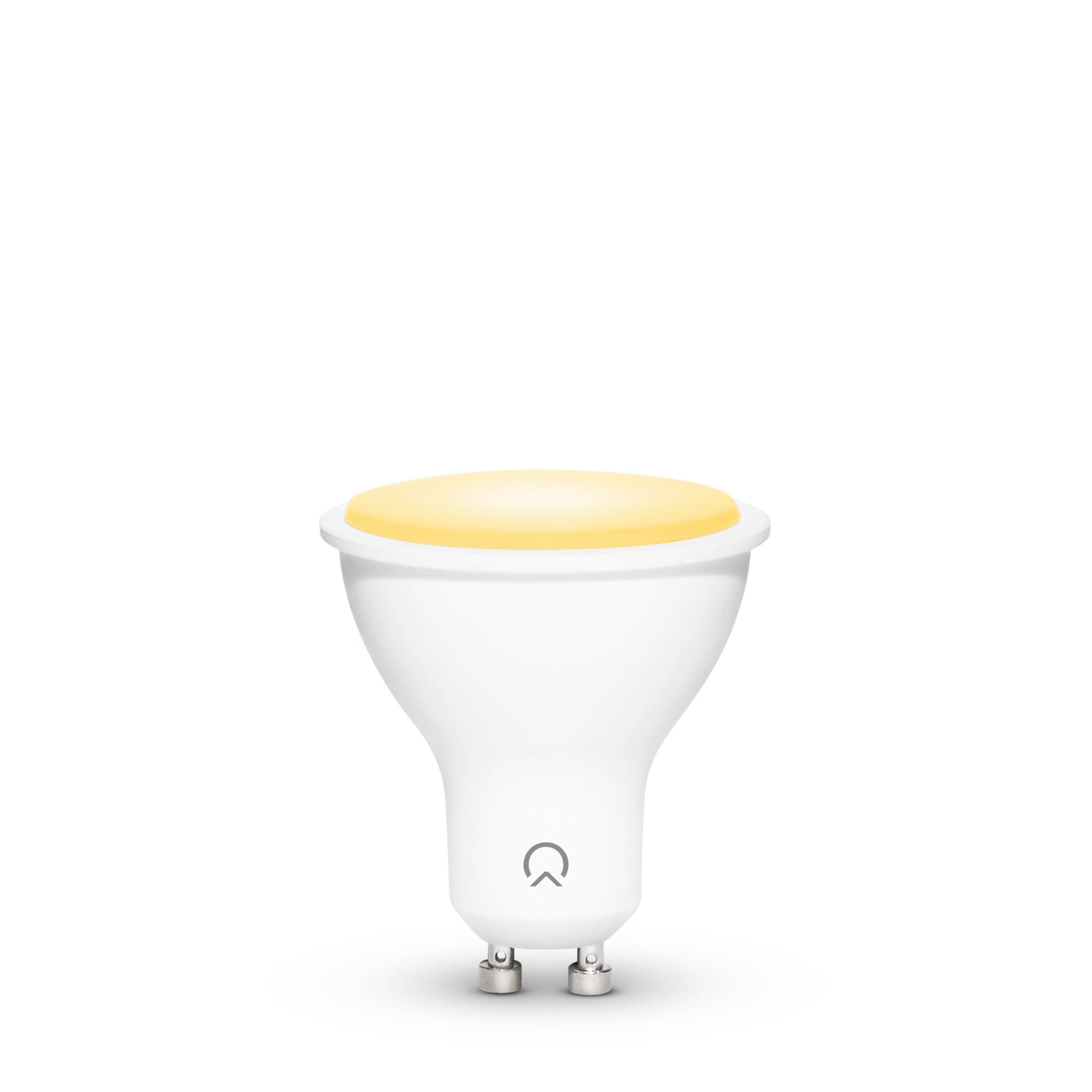
Amber, for your evening
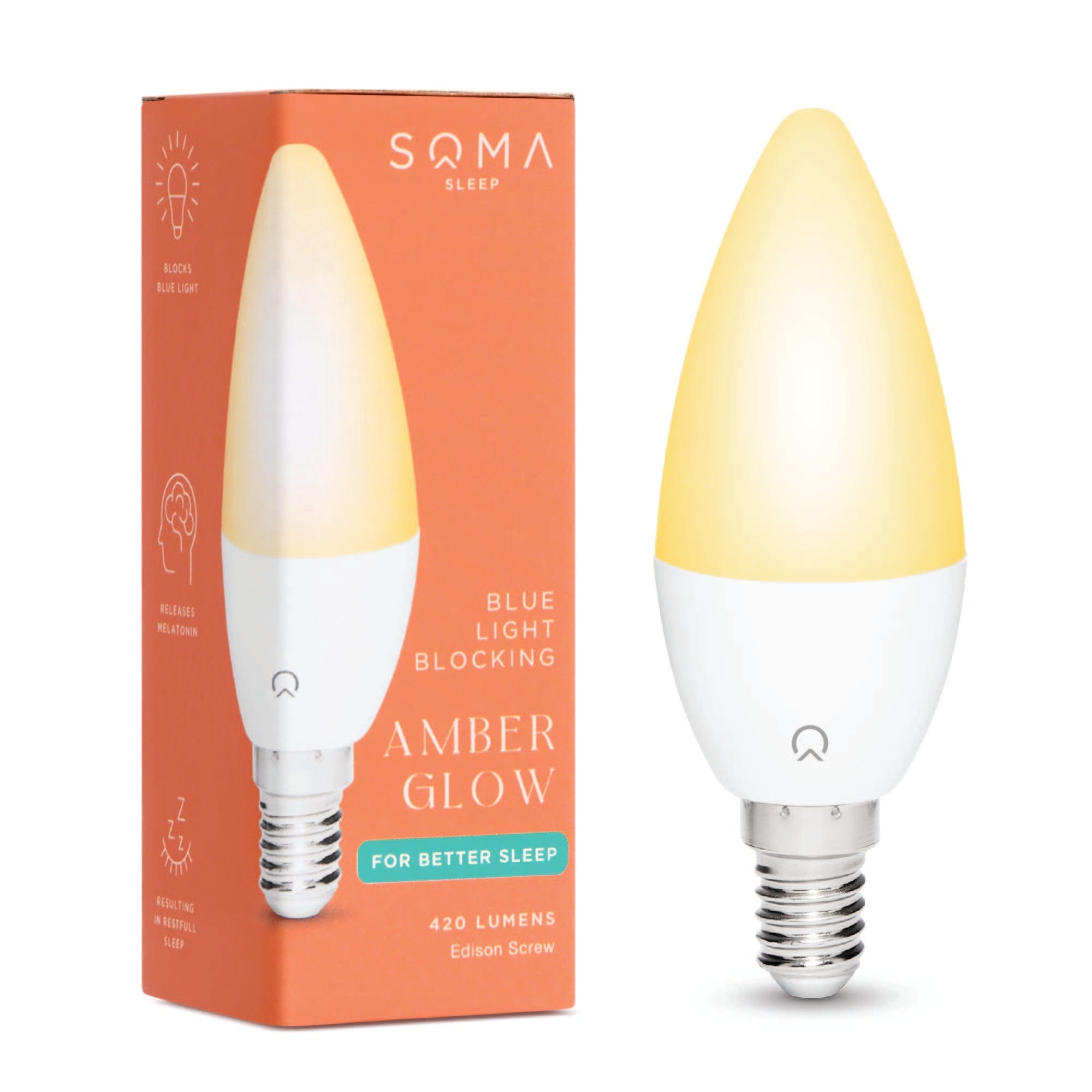
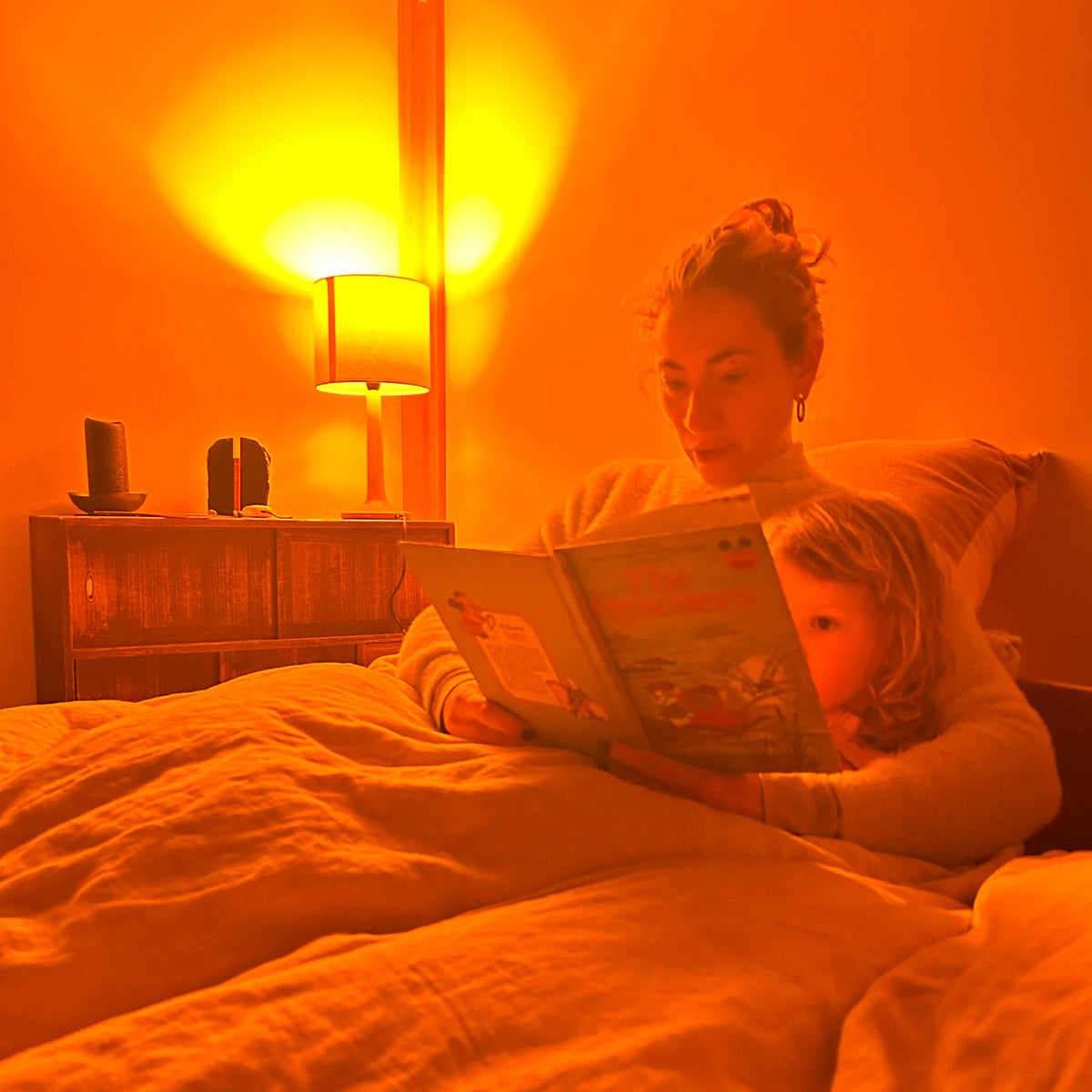
Amber light is your evening default. It's what you live under from dinner to bed: living areas, kitchen, bedside, hallway. Bright enough to read and move around normally, without the alerting signal that keeps you wired. For most people, swapping the rooms you use at night is the single change that makes the biggest difference in the first week.
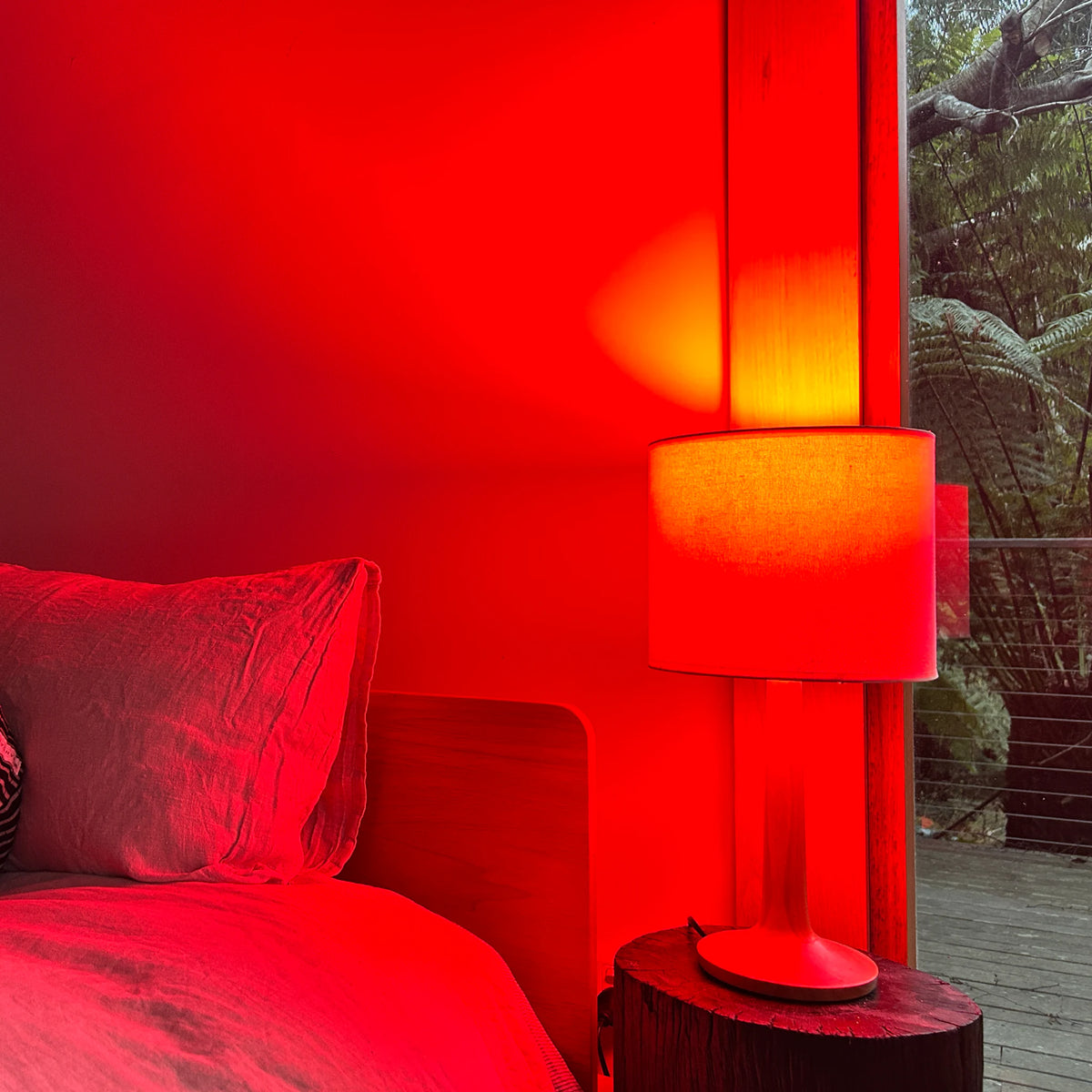
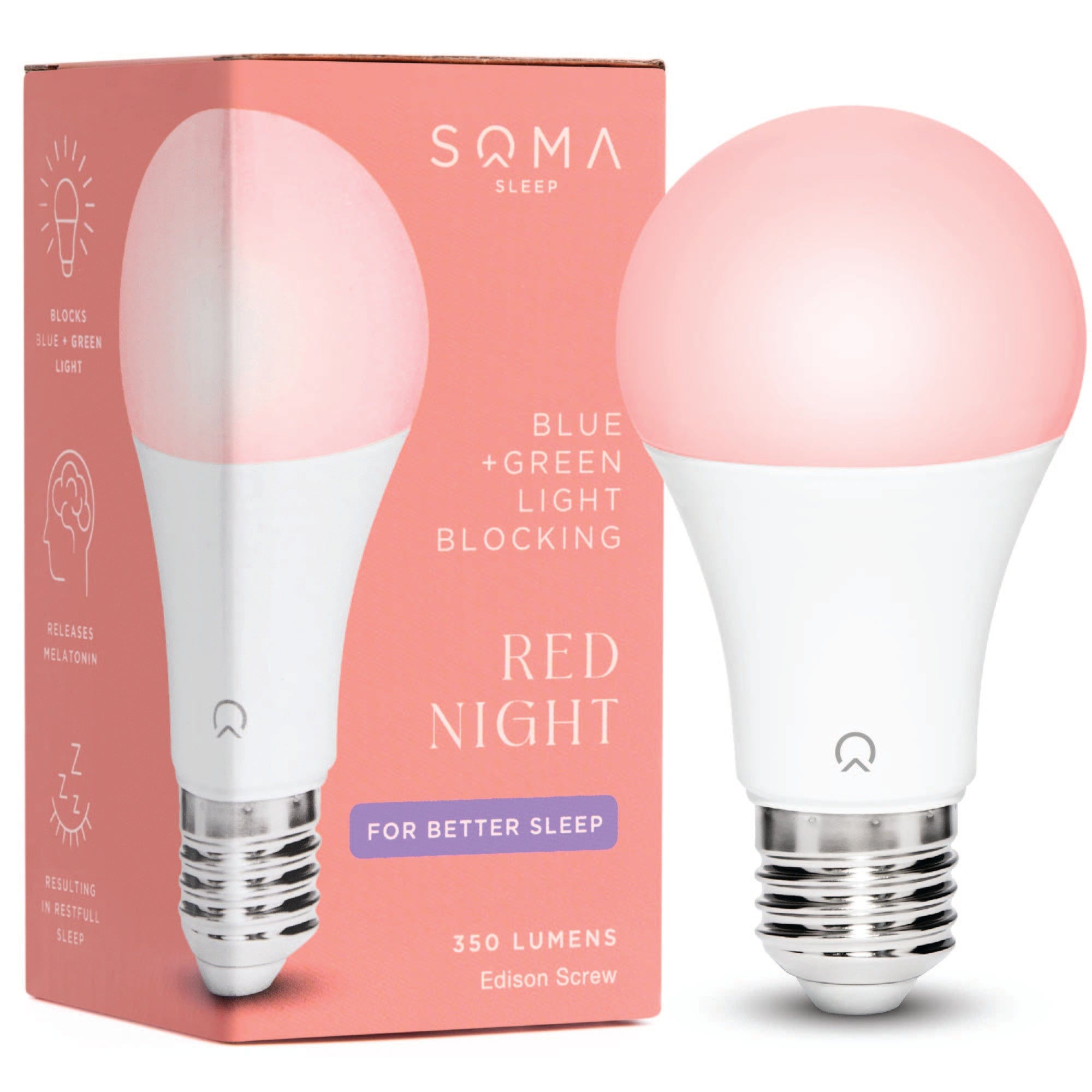
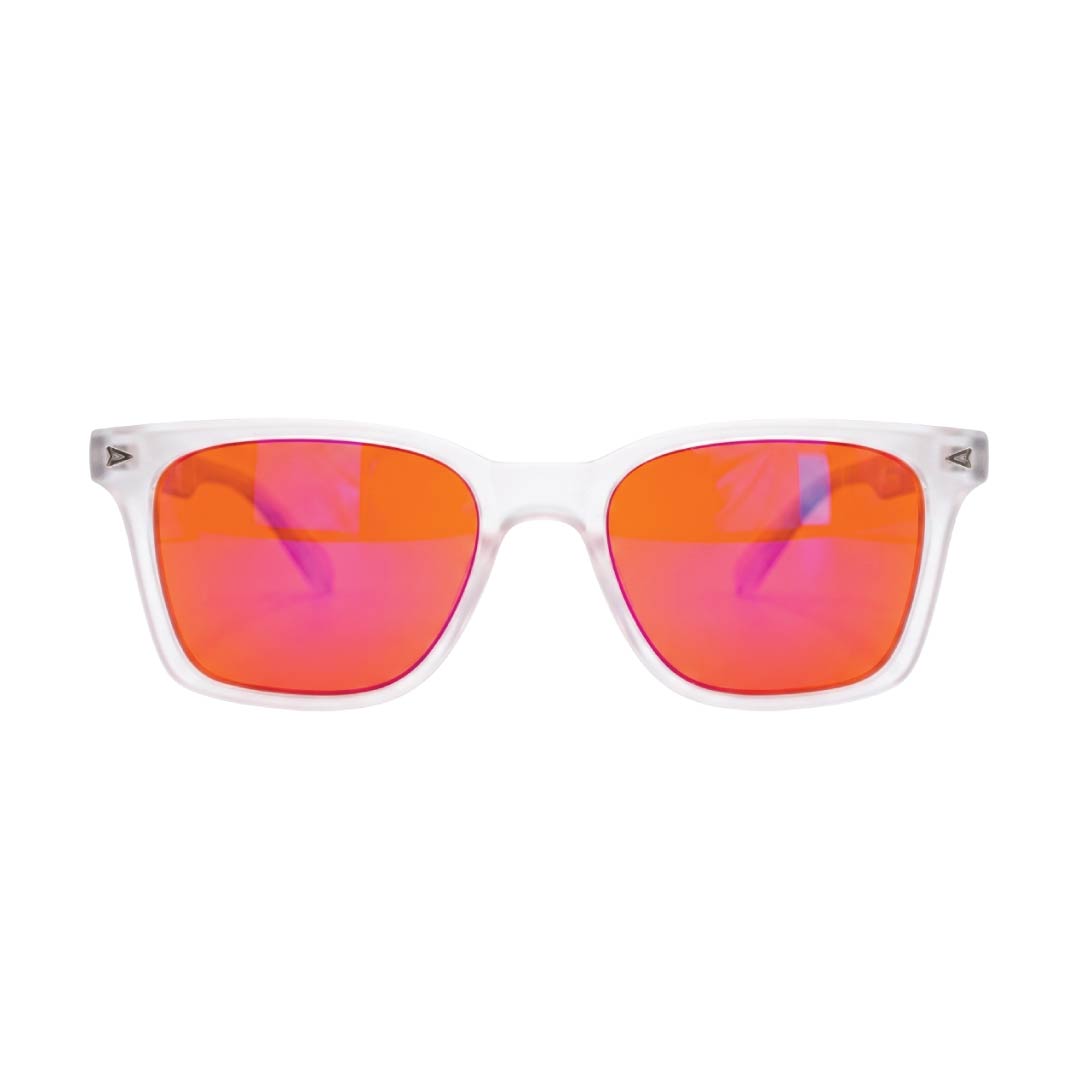
Red, for deep night
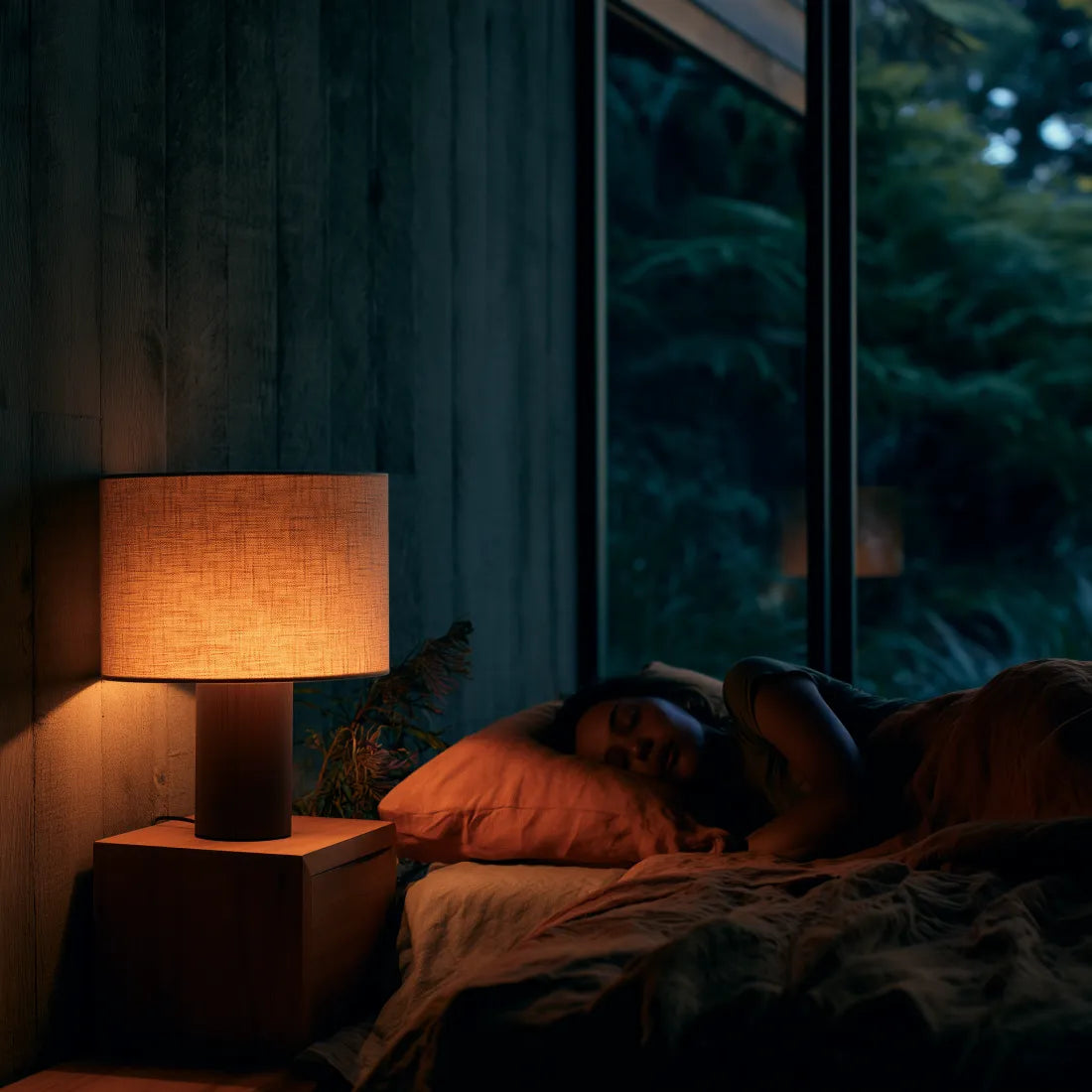
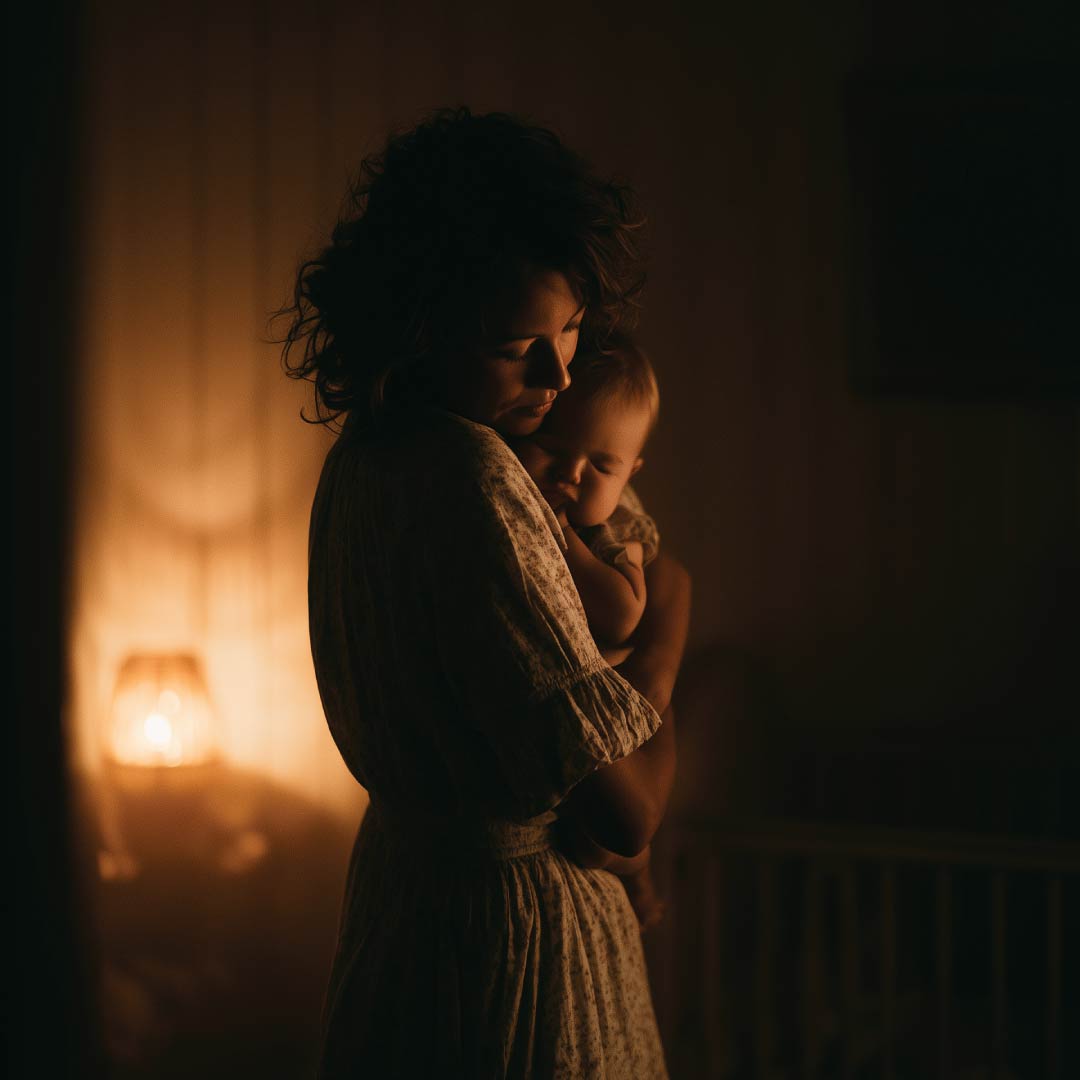
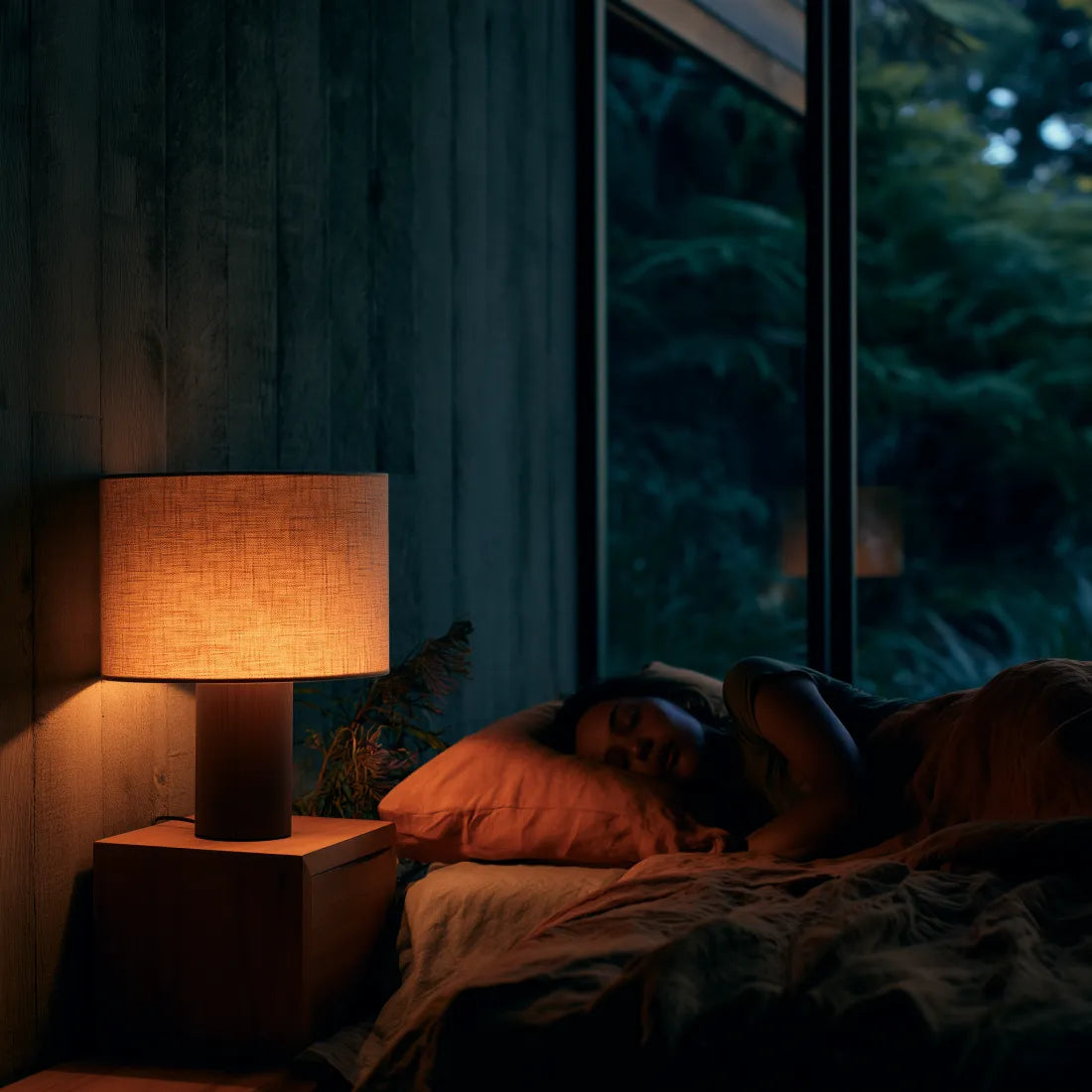
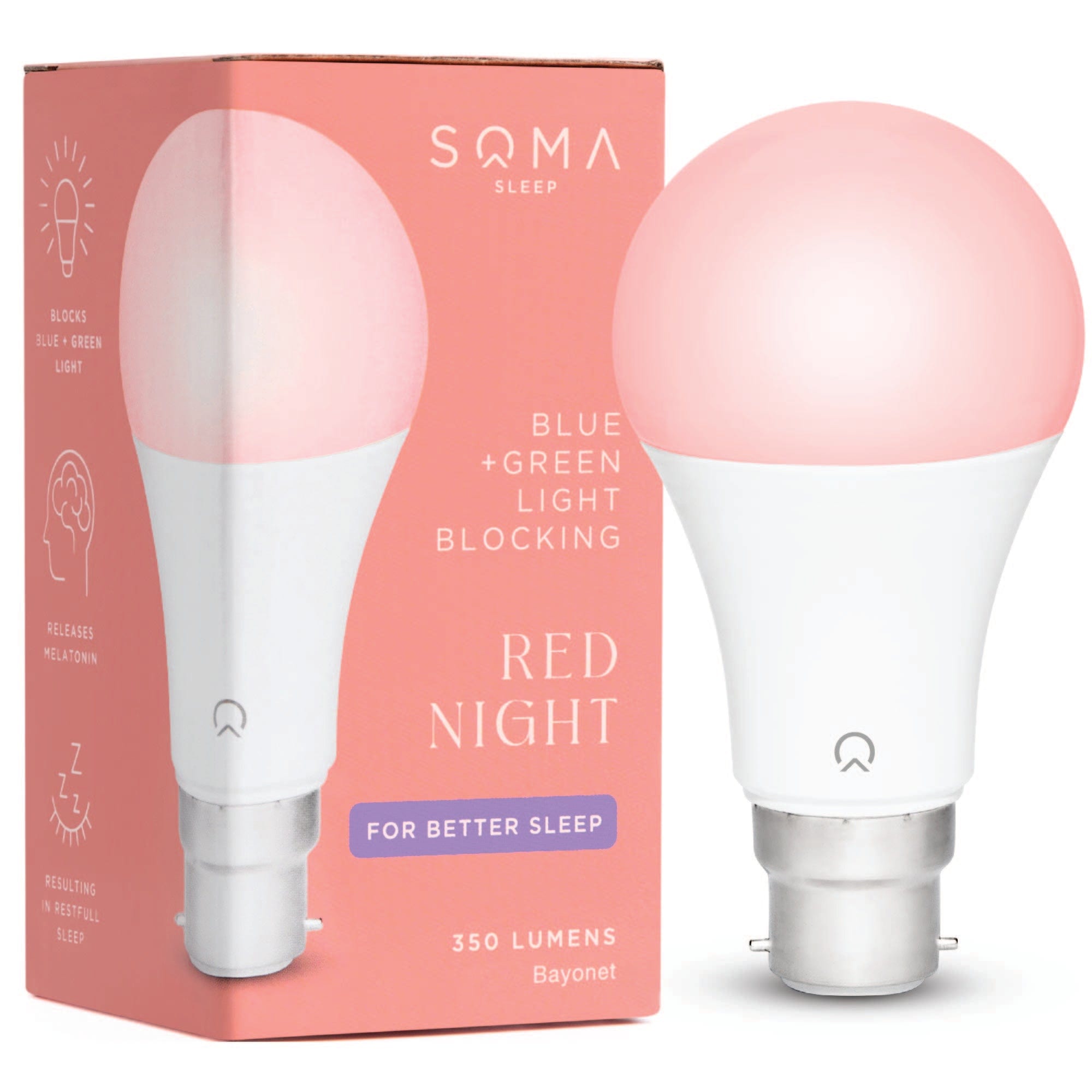
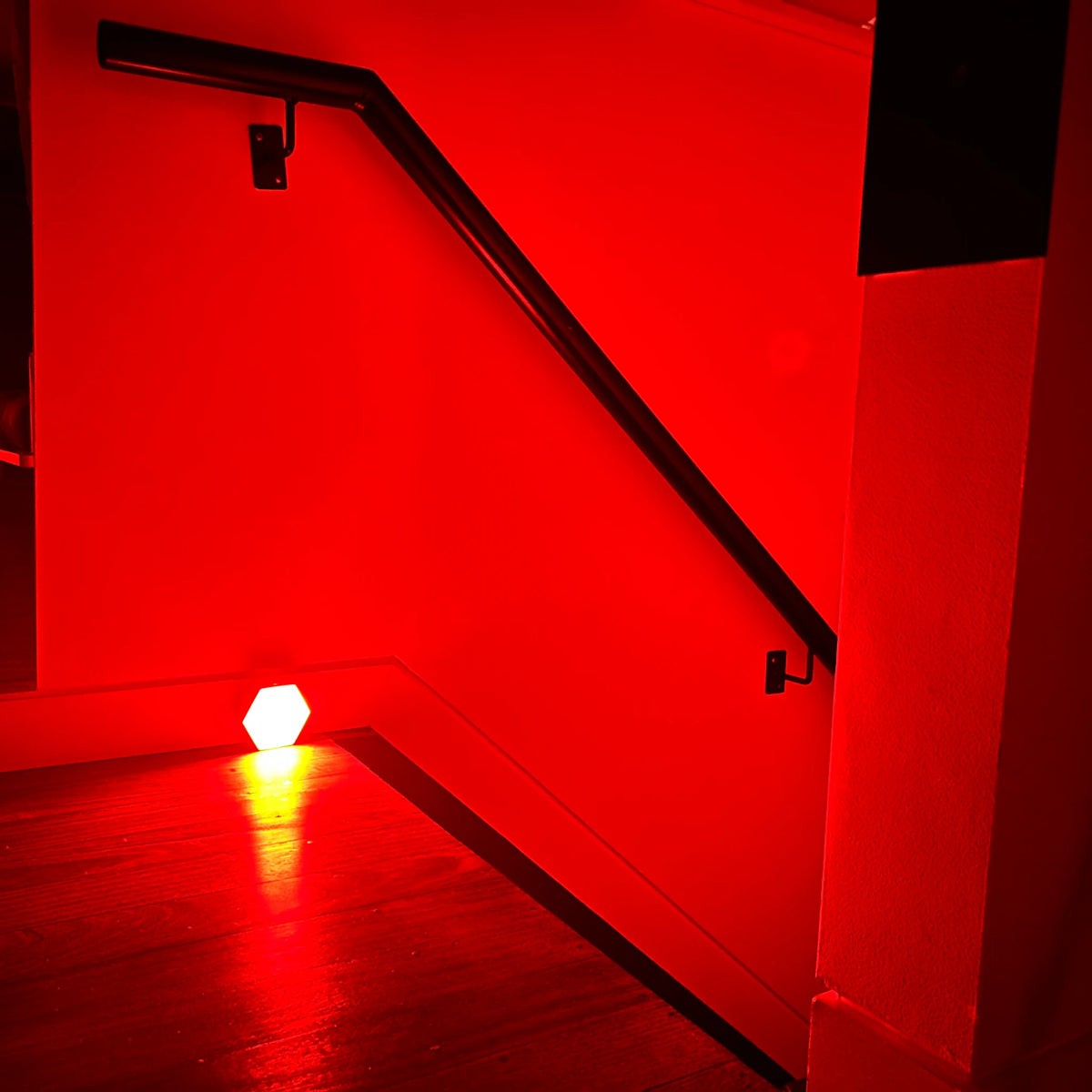
Red light goes a step further. It blocks blue and green light, which makes it the most protective option for the hours you're actually asleep. Reach for a red bulb where a normal light would jolt you awake: the bathroom or hallway at 2am, a bedside lamp, a child's room for night feeds. Amber for winding down. Red for staying down.
Which light do you need?
Most people start with Amber Glow for the living room and add Red Night for the bedroom.
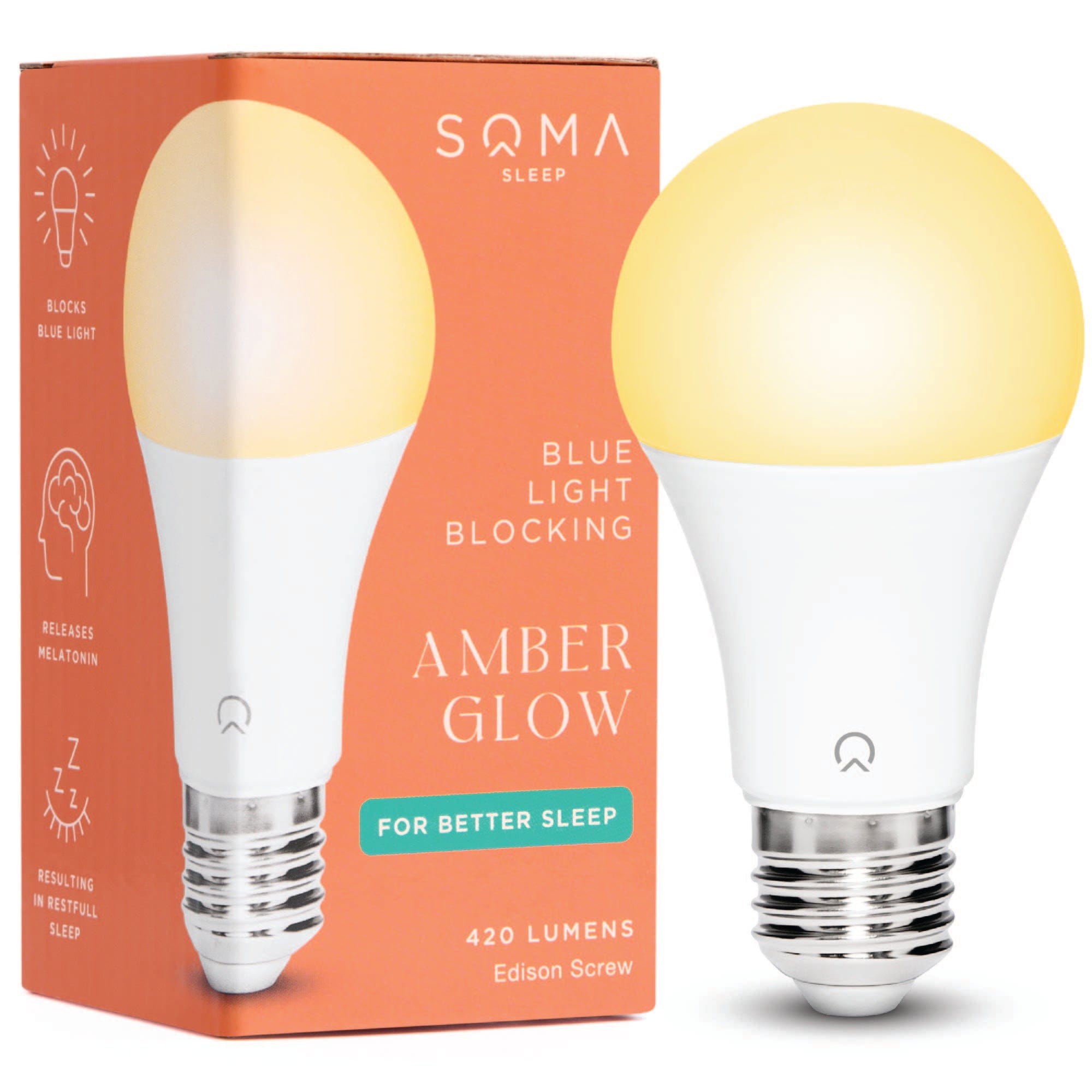
Evening living areas and the lamps you switch on after dinner. The everyday choice.
The bedroom. Night feeds, and getting up at 2am without waking yourself properly.
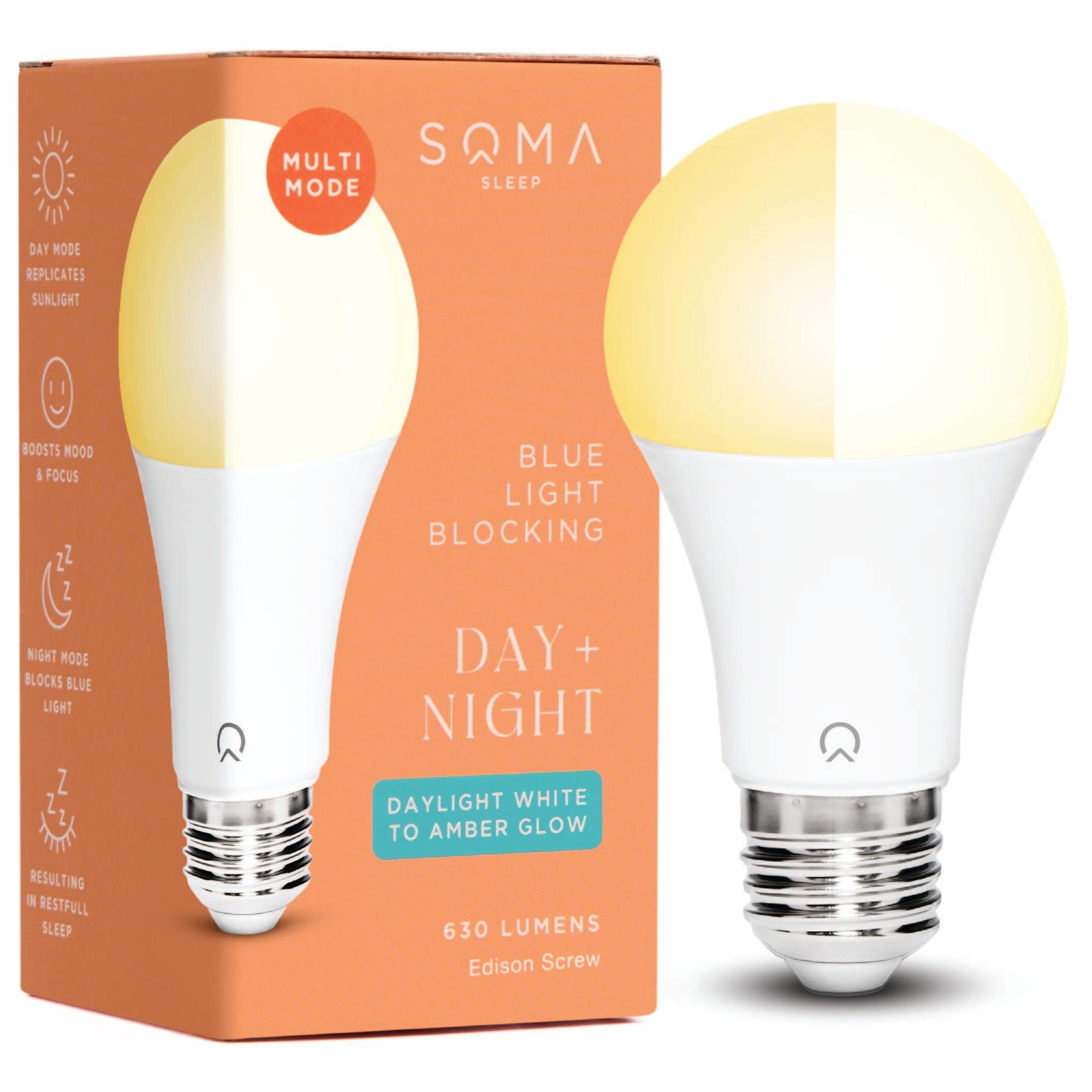
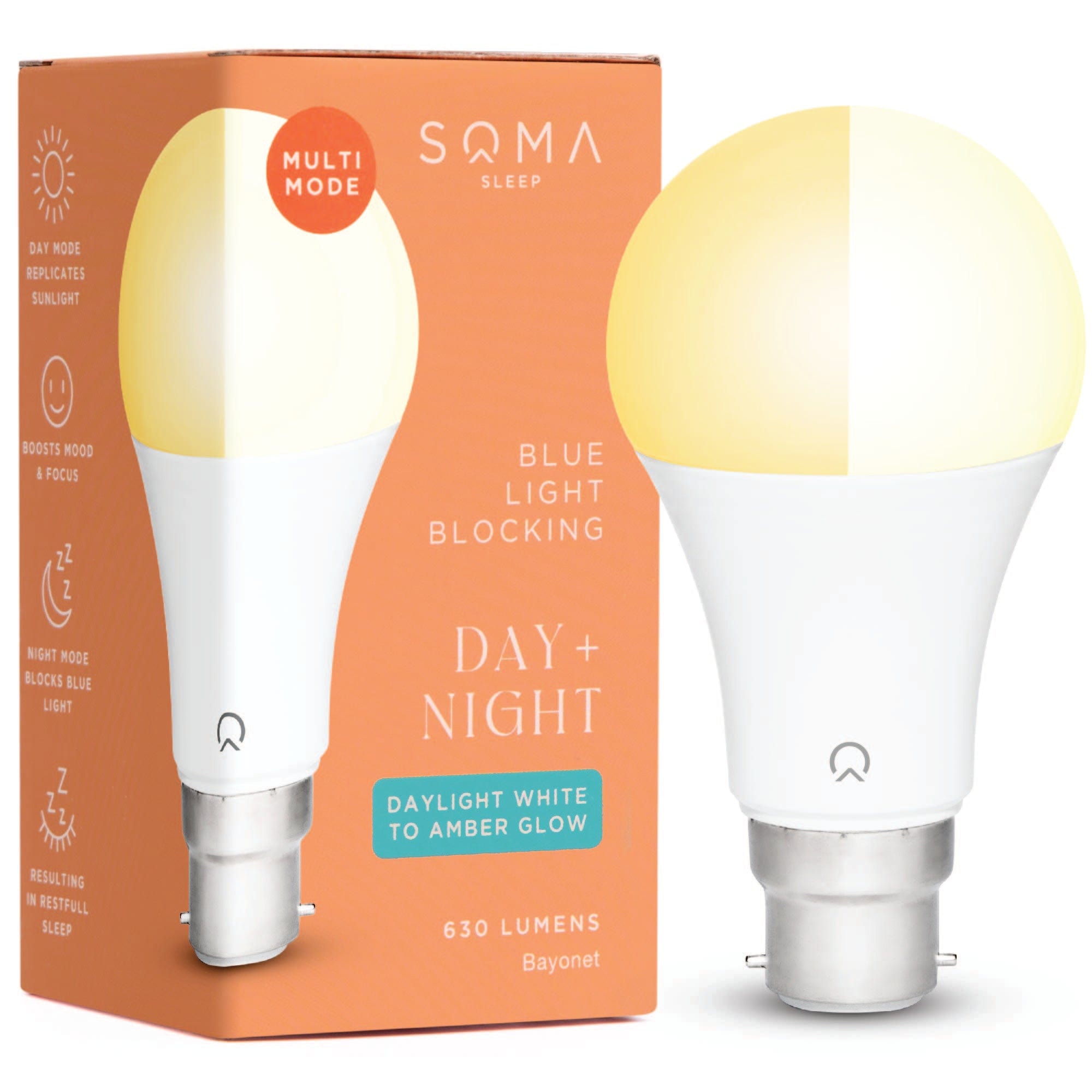
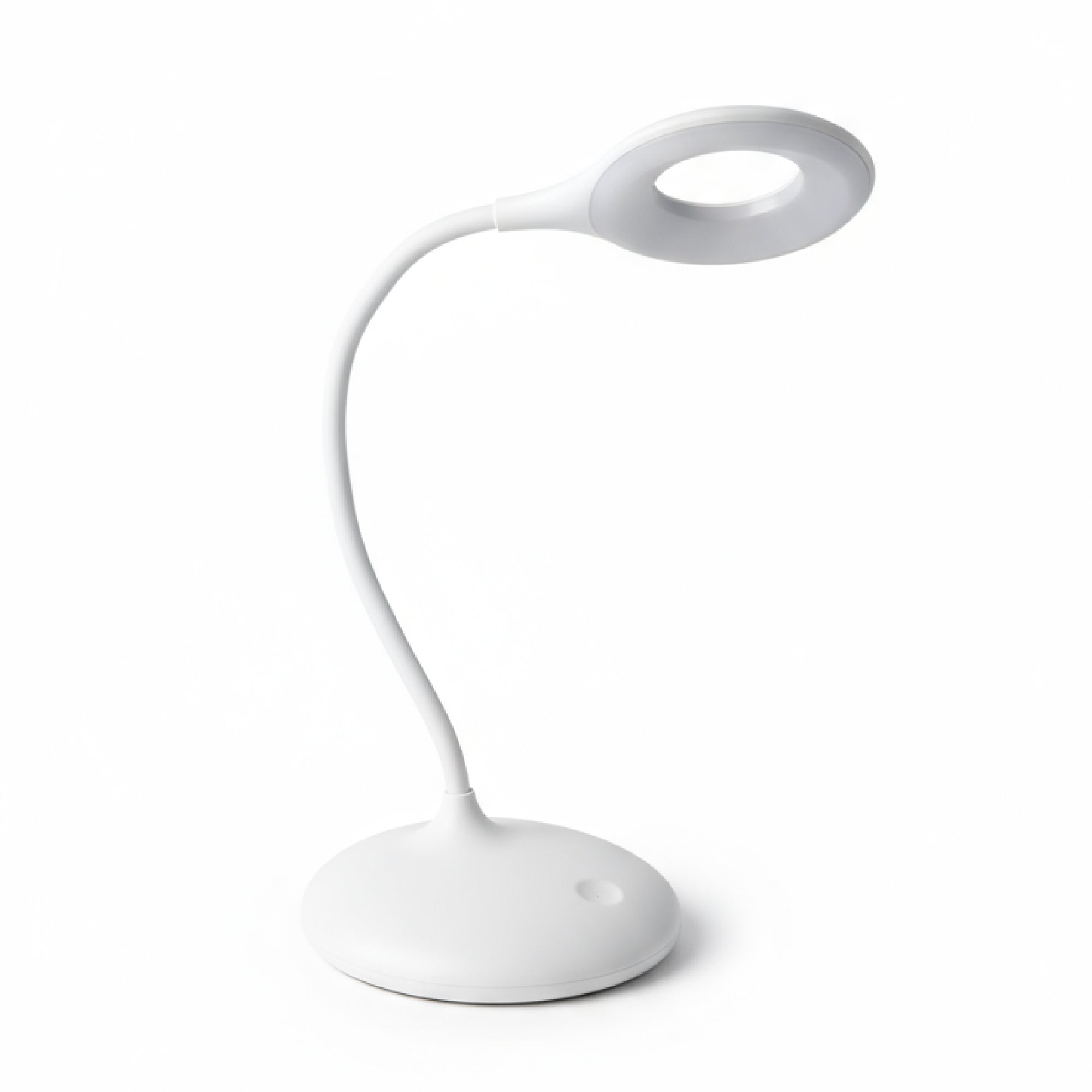
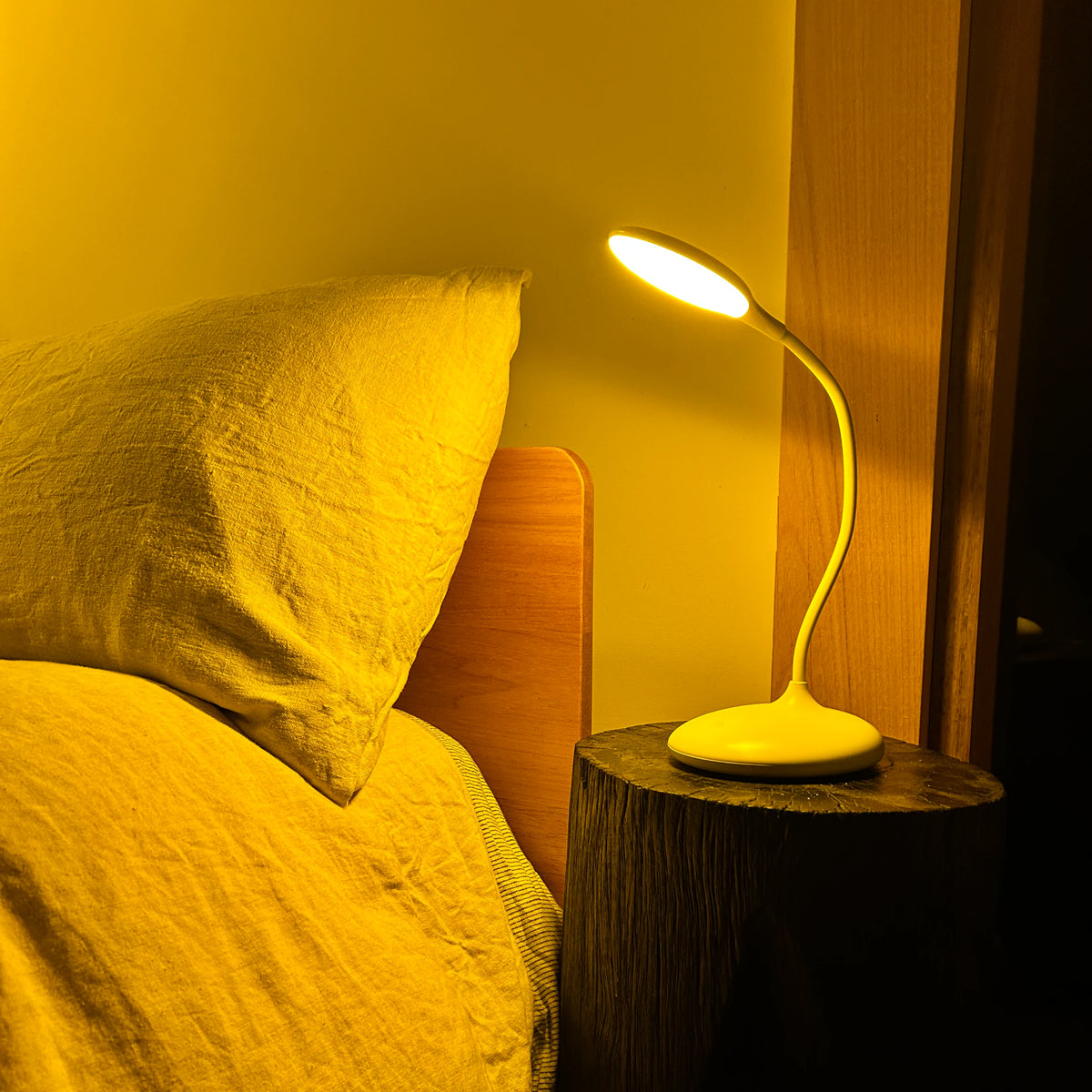
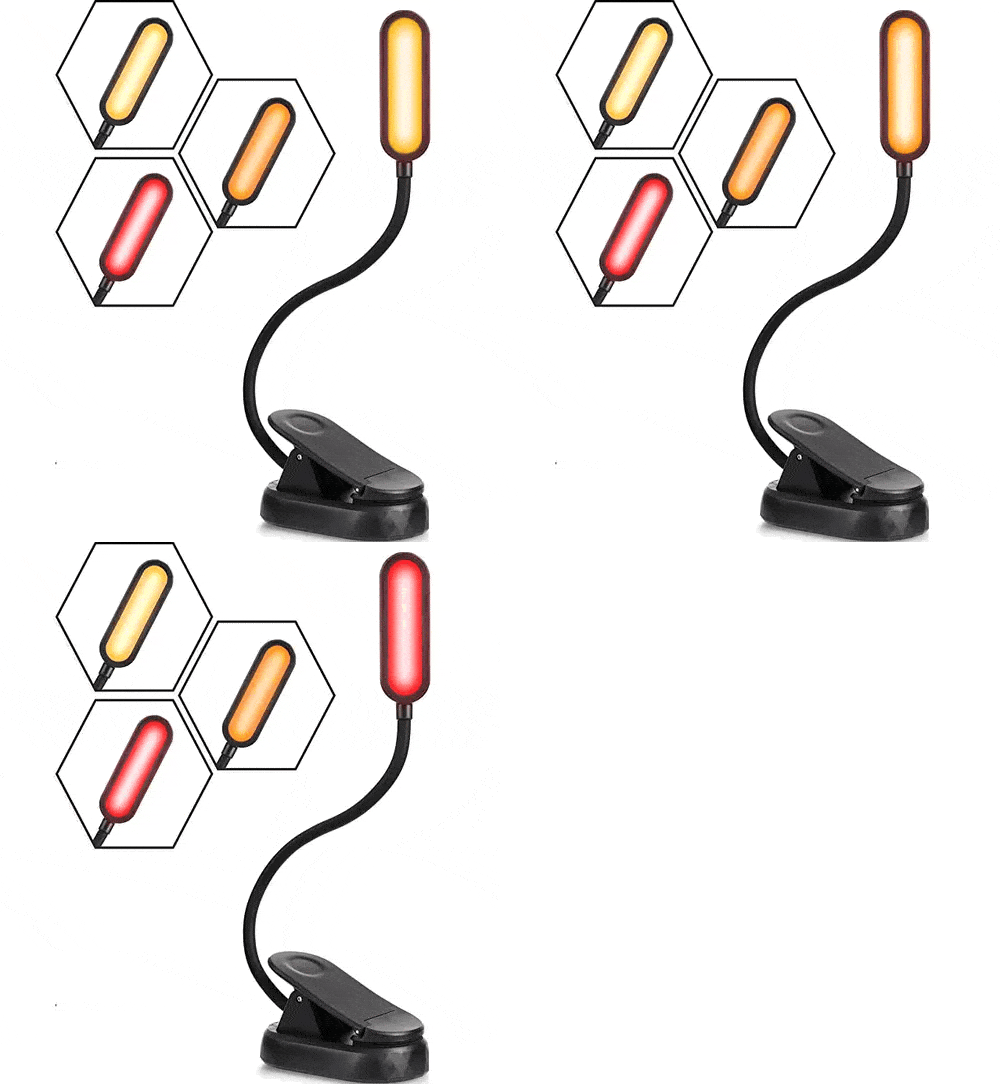
One lamp that works all day. Daylight for the morning, amber once it's dark.
100% of blue light, 380 to 500nm
No measurable blue light (380 to 500nm). 3% of output is green.
Blue light is blocked in night mode only. Day mode is full spectrum, by design.
585nm
Around 630nm
585nm and 630nm in the night mode
420lm, 7W
350lm, 7W
630lm in daylight mode. The night modes are dimmer.
1600K
Not applicable. Single wavelength red.
4000K day, 2100K evening, 1600K night
E27 screw, B22 bayonet, GU10, E14
E27 screw, B22 bayonet
E27 screw, B22 bayonet
Flicker free. Low EMF. RCM certified.
Flicker free. Low EMF. RCM certified.
Three modes on a toggle switch. Flicker free. Low EMF.
FAQ
What's the difference between amber and red sleep bulbs?
Amber is your evening light. It's bright enough to live under from dinner to bed, without the blue wavelengths that hold melatonin back. Red goes further and removes green light too, which makes it the darker, more protective option for the middle of the night. Amber for winding down, red for staying down.
Do blue light blocking bulbs really remove all the blue light?
Our amber bulbs are built to eliminate the 380 to 500nm range, not just soften it. That's the difference between a real blue light blocking bulb and a "warm white" globe that still emits blue behind a warm-looking glow. Red bulbs remove all blue light and most green light as well, for the deepest part of the night.
Are amber bulbs bright enough to read by?
Yes. The Amber Glow puts out 420 lumens, close to a standard warm household globe, so you can read, cook and move around normally. It isn't a dim night light. It's full room lighting with the blue taken out, which is the part that matters for your body clock.
Which light fitting do I need?
Most Australian homes use E27 screw, B22 bayonet or GU10 downlight fittings, with E14 small screw in some lamps and fridges. Check the base of your current globe before you buy. The Amber Glow comes in all four, so there's a direct swap for nearly every fitting in the house.
When should I use a red light bulb instead of amber?
Reach for a red bulb anywhere a normal light would jolt you awake in the small hours. The bathroom or hallway at 2am. A bedside lamp. A child's room for night feeds. Amber suits the hours before bed. Red suits the hours you're meant to be asleep.
Can I put an amber or red bulb in any lamp?
If the fitting matches, yes. Both work in a ceiling fixture, a bedside lamp or a floor lamp. A red lamp beside the bed is one of the easiest wins, because you can leave the harsh overhead light off entirely once the sun goes down.
Will these bulbs actually help me sleep?
They remove one obstacle to sleep rather than promising a cure. Blue and green wavelengths signal "daytime" to your brain and hold back melatonin. Take those wavelengths out of your evening lighting and melatonin can rise as it naturally should. The bulb changes the environment. Your body does the rest.
How much do they cost to run?
About $2 a year for the standard bulbs, with a 30,000-hour lifespan. You change the globe once and the lighting quietly does its job every night after that, with no app, no wifi and no routine to maintain.