
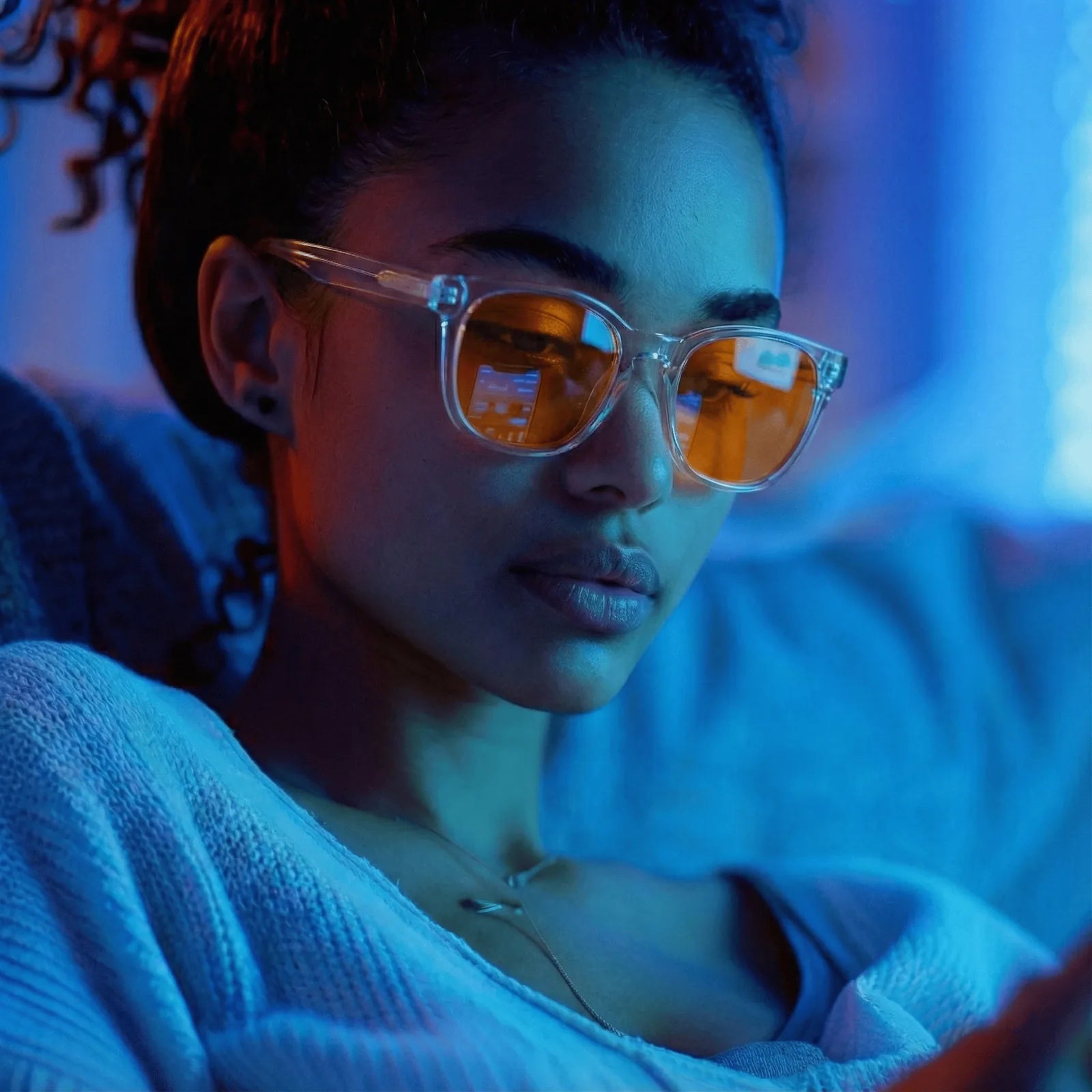
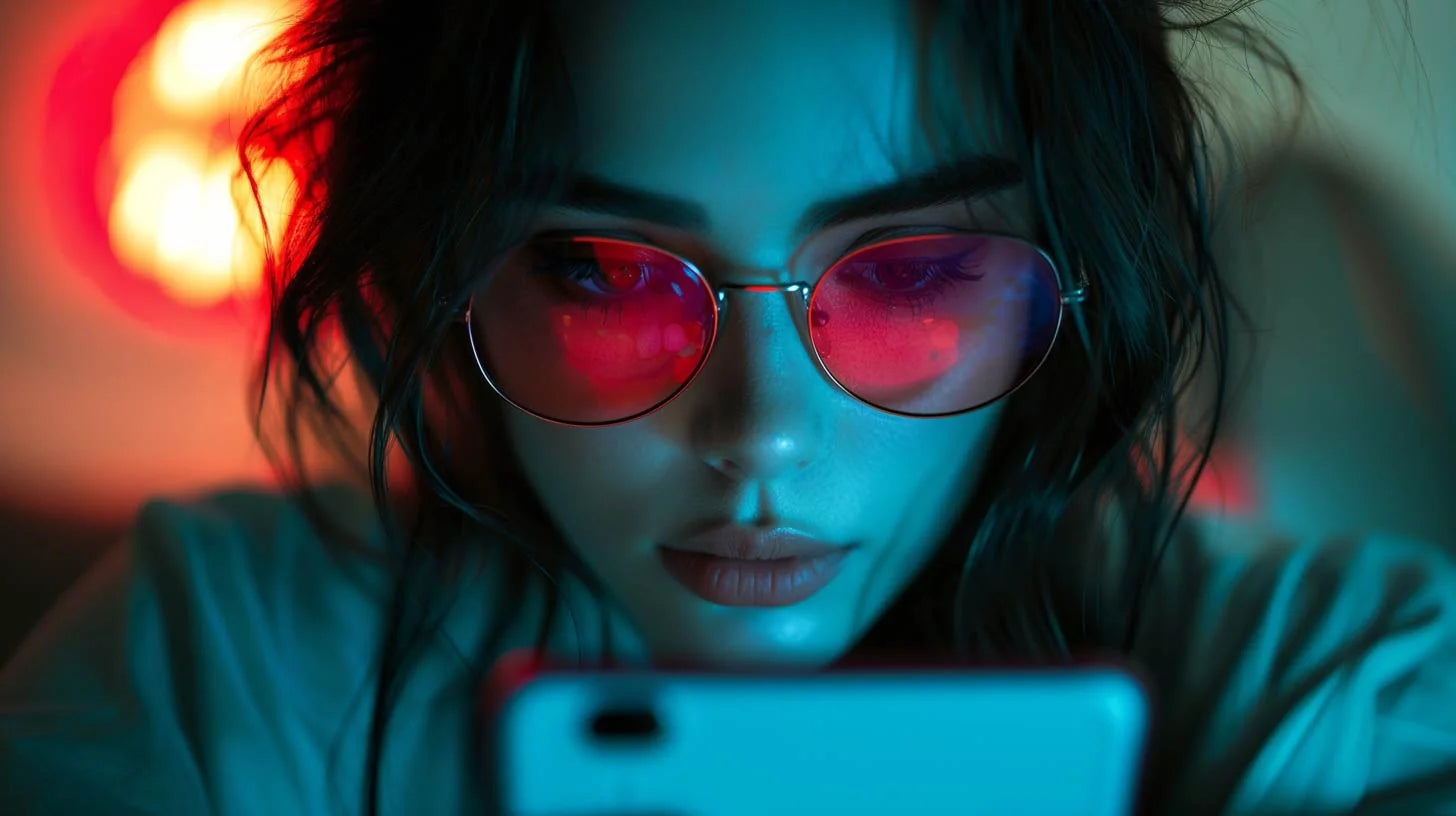
How to Reduce Blue Light Exposure for Better Sleep
Five ways to filter blue light in the evening, and how blue light glasses work
TL;DR
- There are five real ways to reduce blue light exposure in the evening: blue light glasses, amber bulbs, red night lights, screen habits, and full darkness.
- Blue light (400 to 500nm) suppresses melatonin, the hormone that signals sleep time. Evening exposure delays sleep onset by 30 to 60 minutes on average.
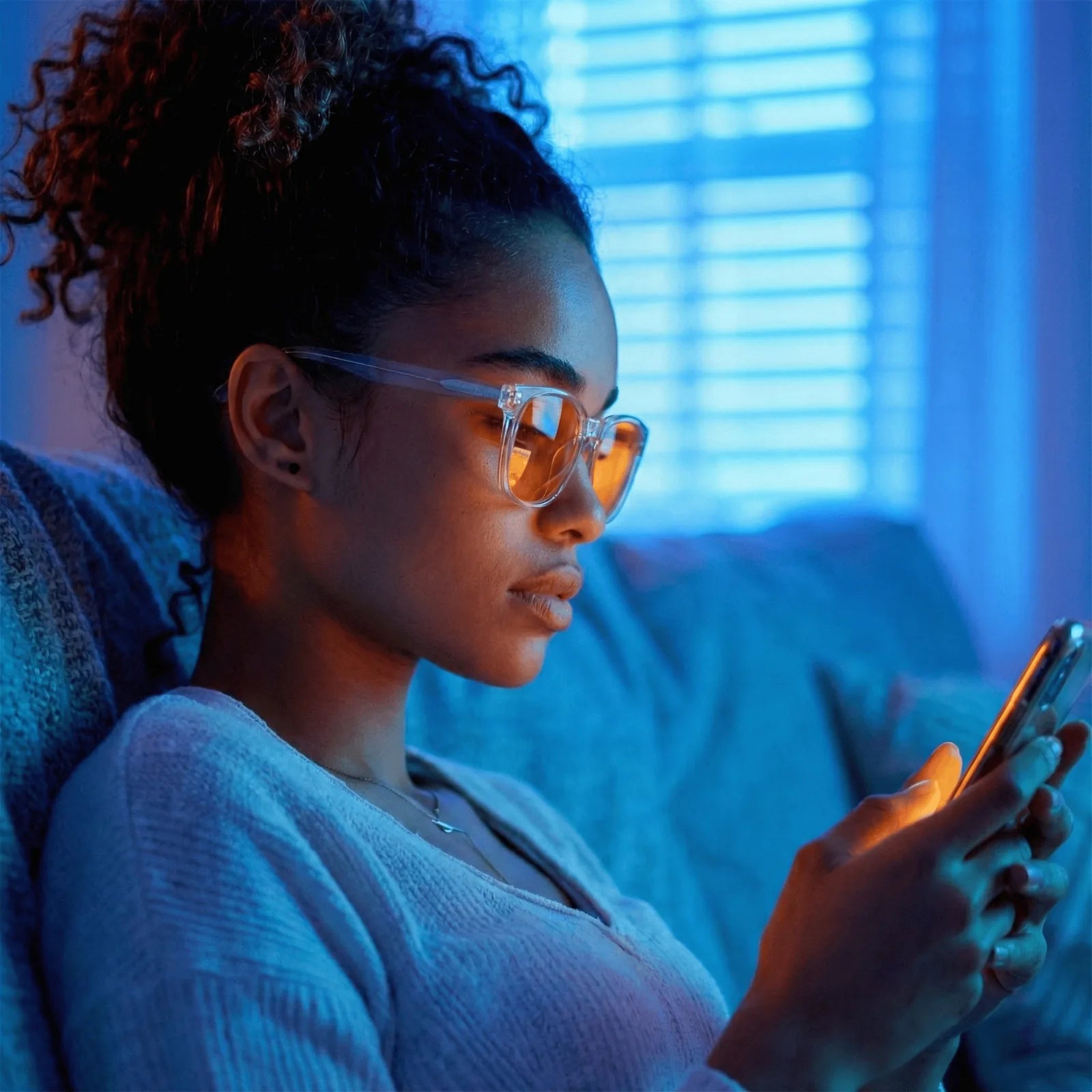
- Blue light glasses are the fastest and most-researched method. Soma's amber glasses filter that band with amber lenses and let everything else through, blocking 100% of it, not the 50 to 80% partial-blocking of standard computer glasses.
- Red-tinted lenses block a wider band (blue and most of green) and are better suited to total-darkness moments than to reading or screens.
- Wear glasses 1 to 2 hours before bed, remove them when you get into bed. Consistency matters more than any single night.
- The methods compound: glasses, amber bulbs, red night lights, and a consistent routine work more reliably together than any one alone.
If you're wide awake at 11pm scrolling your phone, wondering why your body won't switch off, the light in front of you is a big part of the answer. Blue light, the 400 to 500 nanometre band in every screen and most overhead lighting, suppresses melatonin, the hormone that signals your brain to prepare for sleep. Evening exposure delays sleep onset by 30 to 60 minutes on average.
There are five real ways to reduce blue light exposure in the evening:
- Blue light glasses. Filter blue light directly at your eyes. The fastest to start and the most researched.
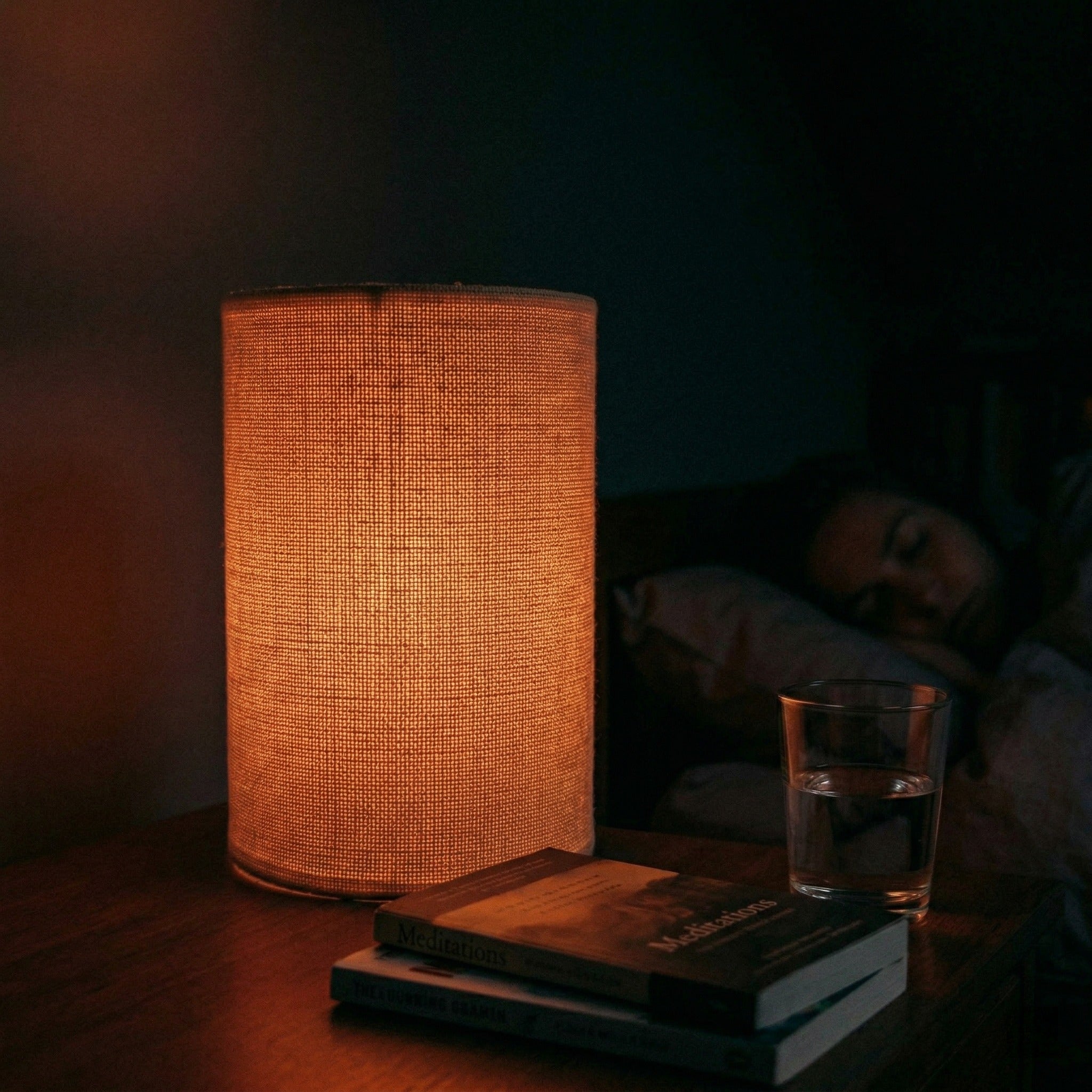
- Amber bulbs. Remove blue light from the room itself, not just your eyes.
- Red night lights. For the moments you don't need to see clearly, with close to zero blue or green light.
- Screen habits. Night mode, warm colour temperature, and screens away before bed.
- Full darkness. Blackout curtains or a sleep mask, for when even ambient light is too much.
This guide covers all five, starting with the one that has the strongest evidence behind it and takes the least effort to start.
What Blue Light Does to Your Sleep
What is blue light?
Blue light is the short-wavelength end of the visible spectrum, roughly 400 to 500 nanometres. It's not artificial. It's part of ordinary daylight, and your eyes evolved to use it as a clock.
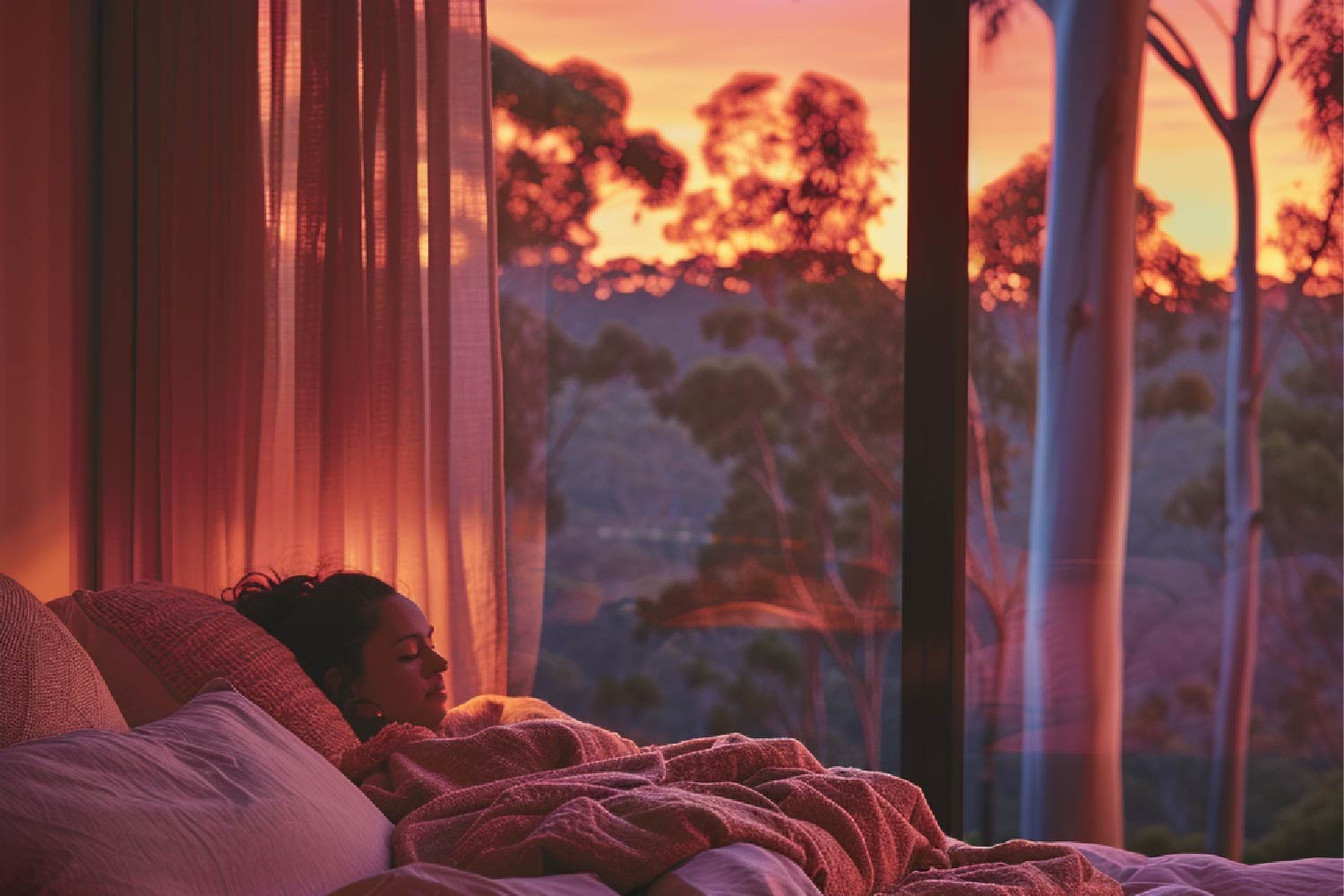
The amount of blue light in what you're looking at changes a lot depending on the source. Screens and LED overhead lighting run cooler and bluer than incandescent or candlelight. Morning sunlight is rich in blue, which is part of why it wakes you up. Evening sunlight isn't: as the sun drops toward the horizon, its light passes through more atmosphere, and the blue wavelengths scatter out of the direct beam before they reach you, which is also why sunsets look orange and red rather than white. Your evening environment is meant to shift the same way. Screens and overhead lighting don't make that shift on their own, they stay the same cool colour at 9pm as they were at 9am, which is the mismatch blue light glasses are designed to correct.
Why blue light disrupts sleep
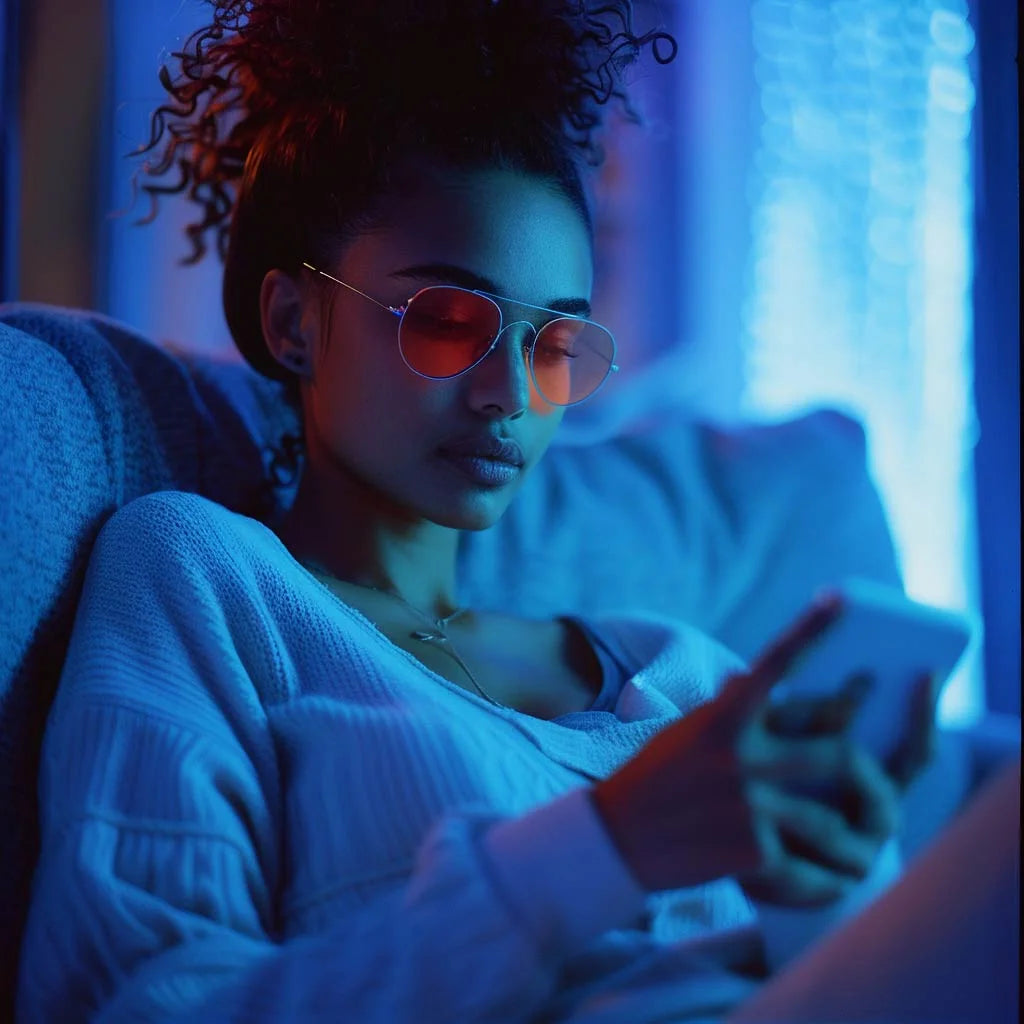
Your eyes contain a class of cells separate from the rods and cones you see with: melanopsin-containing retinal ganglion cells (ipRGCs). They don't build the image you perceive. Their only job is to sense light levels and report them to your circadian system.
When blue light hits these cells, they send a signal to your brain: it's daytime, stay alert. Your brain responds by:
- Suppressing melatonin production, the hormone that signals sleep
- Increasing cortisol, a wakefulness hormone
- Boosting alertness and delaying sleep onset
- Fragmenting sleep architecture once you do fall asleep, meaning more night wakings and lighter sleep
Useful at 8am. Disruptive at 8pm when you're trying to wind down.
Research confirms that exposure to ordinary room light before bedtime suppresses melatonin onset and shortens melatonin duration in humans, delaying the whole process rather than just dimming it slightly.
The circadian rhythm connection
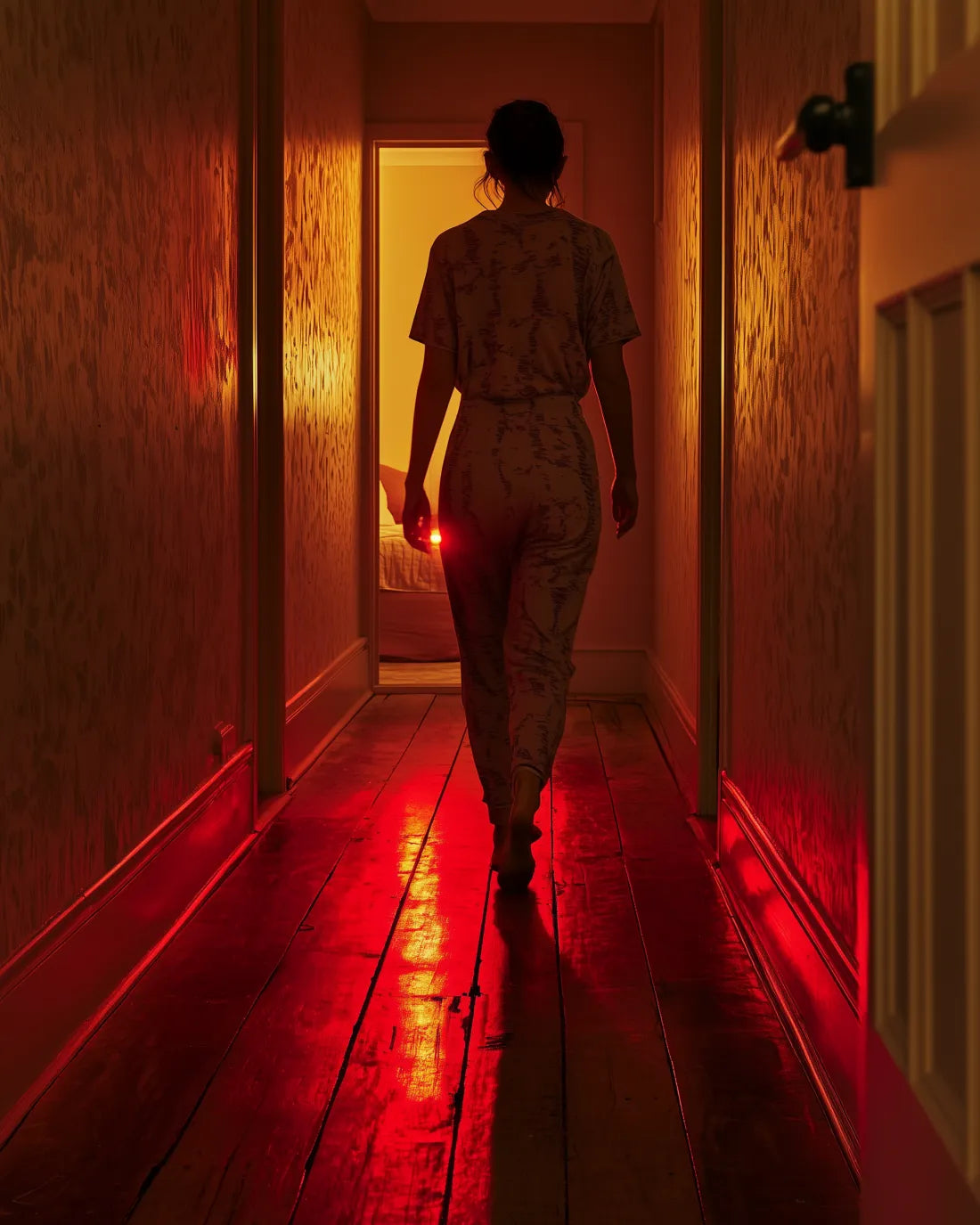
Melatonin is produced by your pineal gland, deep in the brain, largely in response to darkness. Your circadian rhythm, the roughly 24-hour clock that governs sleep-wake cycles, hormone timing, and body temperature, uses light as its primary timing cue, and blue wavelengths are the strongest part of that cue.
- Morning light: melanopsin cells detect blue light, your brain suppresses melatonin, you wake up alert.
- Evening darkness: no blue signal, melatonin rises, sleep onset happens on schedule.
- Evening blue light: melanopsin cells detect blue light anyway, your brain suppresses melatonin on a false daytime signal, sleep is delayed.
Research mapping the melanopsin action spectrum found the strongest melatonin-suppressing effect concentrated between 446 and 477 nanometres, the blue-violet band. Expose yourself to it in the evening and you're telling your circadian system it's still daytime. Block it, and your circadian rhythm is free to progress toward evening on its own schedule.
What does the research say about blue light glasses specifically?
Three controlled studies looked at blue light glasses, not just blue light exposure, and sleep outcomes directly:
- A randomised controlled trial at Columbia University had insomnia patients wear amber-tinted blue-blocking lenses for two hours before bed against a clear-lens placebo group. The amber-lens group reported significantly higher total sleep time and sleep quality.
- A study on blue-light shield eyewear found wearers had significantly better objective sleep efficiency and sleep latency than a control-eyewear group, alongside higher overnight melatonin.
- A randomised trial of amber lenses versus yellow-tinted controls found a significant improvement in both sleep quality and mood in the amber group over two weeks, even though that group started with worse sleep at baseline.
None of these claim blue light glasses cure anything. What they consistently show is a mechanism-matched effect: block the wavelength that suppresses melatonin, and sleep measures move in the expected direction.
How Blue Light Glasses Work
Of the five ways to reduce blue light exposure, glasses are the one to start with: nothing to install, nothing to replace, just put them on.
The amber lens mechanism
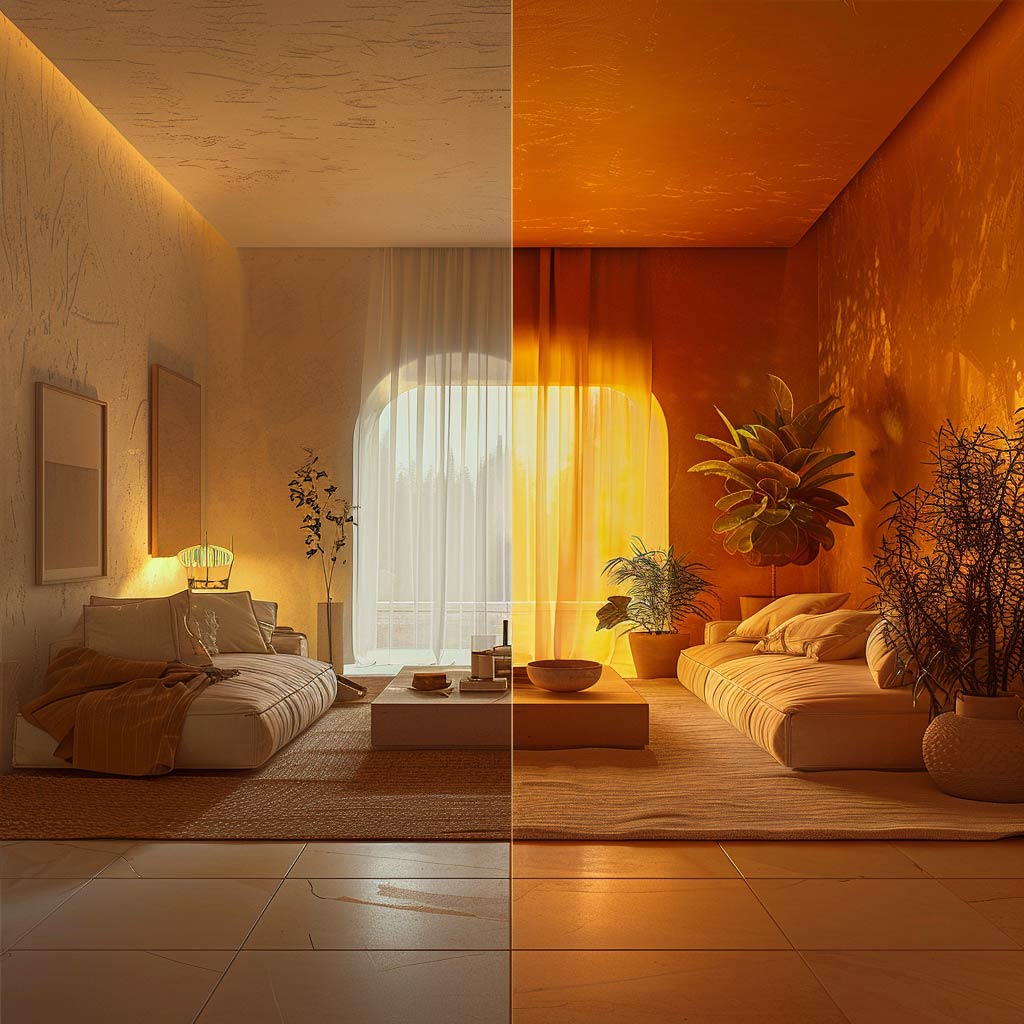
Amber lenses work by subtraction, not addition. A dye in the lens absorbs light in the 400 to 500 nanometre range and lets longer wavelengths, yellow, orange, red, and most green, pass through close to unaffected. Nothing is added to the light reaching your eye. A slice of it is removed.
That's why the world looks warm-tinted through them rather than dark. You're not looking through a dimmer, you're looking through a filter tuned to one part of the spectrum.

How much blue light do blue light glasses actually block?
Not all "blue-light-blocking" glasses are equal, and the gap matters more than the marketing suggests.
Computer glasses, the kind sold for screen work, typically block 50 to 80% of blue light. They cut some eye strain during the day but leave a meaningful amount of blue light passing through, enough that if you wear them in the evening instead of amber glasses, residual blue exposure can still delay sleep onset by 10 to 15 minutes.
Soma glasses block 100% of the 400 to 500 nanometre range. Research on nocturnal blue light blocking supports filtering the full band rather than partially attenuating it: full melatonin recovery instead of residual suppression, and consistent results across different light sources, whether you're near a phone screen, a laptop, or overhead LEDs.
Why not wear computer glasses instead?
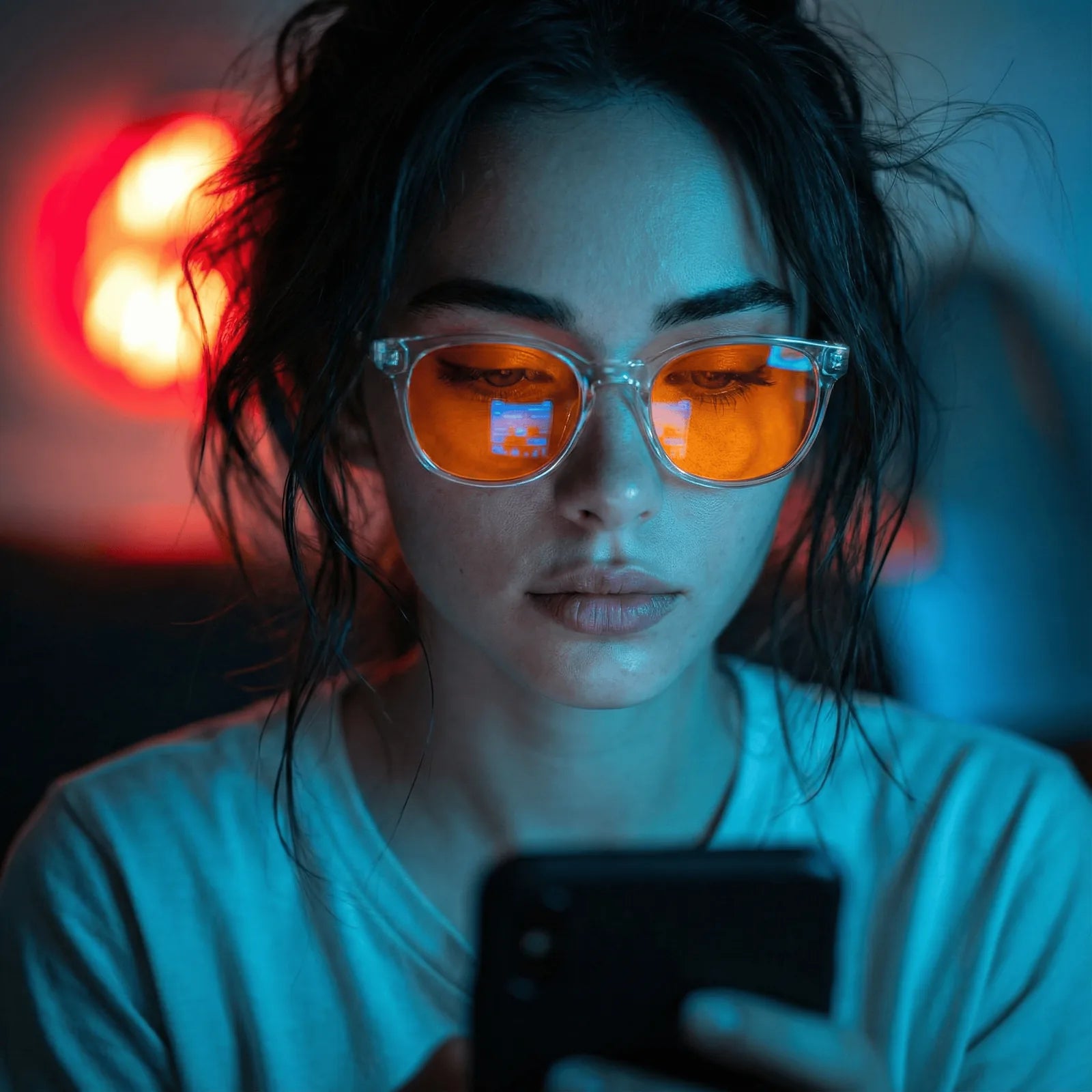
The amber tint on Soma glasses is heavier than a typical pair of computer glasses. That's deliberate: more blue is being filtered, so the visual shift is larger.
That's also why the two aren't interchangeable. Computer glasses (50 to 80% blocking) are built to reduce daytime eye strain without distorting colour much, since you need accurate colour and full alertness at your desk. Wearing them in the evening under-filters. Wearing Soma's full-block amber lenses during the day would do the opposite: dull your morning blue light exposure (which you actually want, since it's what sets your circadian rhythm each day), distort colour more than most people want at work, and reduce alertness when you need it. Soma glasses are built for the evening wind-down window specifically, not for all-day wear.

Red light glasses vs. amber glasses
Amber and red-tinted lenses get used interchangeably in casual conversation, but they filter different parts of the spectrum, and that difference decides what each is actually good for.
Amber lenses, the lens Soma uses across all three glasses styles, are a narrow-band filter. They block the 400 to 500nm range and let green, yellow, orange, and red light through close to unaffected. Colour looks warm-shifted, but there's enough of the spectrum left that reading, screen use, and moving through a lit room stay easy.
True red lenses filter a wider slice. Melanopsin's sensitivity doesn't drop to zero right at 500nm, it tapers off gradually through the green range, so cutting closer to zero circadian stimulation generally means blocking green wavelengths as well as blue. Soma's own red-spectrum products are built this way: the Red Night Light Bulb and the Red Night Light Motion-Activated use native red LEDs that peak around 632nm. The bulb's measured output has no blue light and 3% green, a considerably wider cut than an amber lens.
That wider cut is the trade-off. With most of the green and blue spectrum removed, what reaches your eye is a narrow red-orange band, and colour, contrast, and detail all suffer for it. Reading text or looking at a screen through a true red lens is genuinely hard. Most people only find red-tinted lenses usable for moving through a dark space, not for anything that needs focus.
That's the reasoning behind how Soma splits the two rather than blending them. Glasses use amber, because you're wearing them for one to two hours while still reading, using screens, and functioning in a lit room. Red products are night lights and bulbs, not glasses, because they're for the specific moments you don't need to see clearly. If you're deciding what to use where: amber glasses for anything you're actively doing before bed, red light for the brief moments you want close to zero light stimulation and don't need to see in detail.
How Should You Wear Blue Light Glasses for Best Results?
Timing and duration
Timing. Start wearing them 1 to 2 hours before your target bedtime. If you sleep at 11pm, put them on at 9 to 10pm. Why 1 to 2 hours, not just at bedtime? Melatonin takes 30 to 60 minutes to respond once the blue-light signal stops. Starting early gives your body time to build sleep pressure before you actually try to sleep.
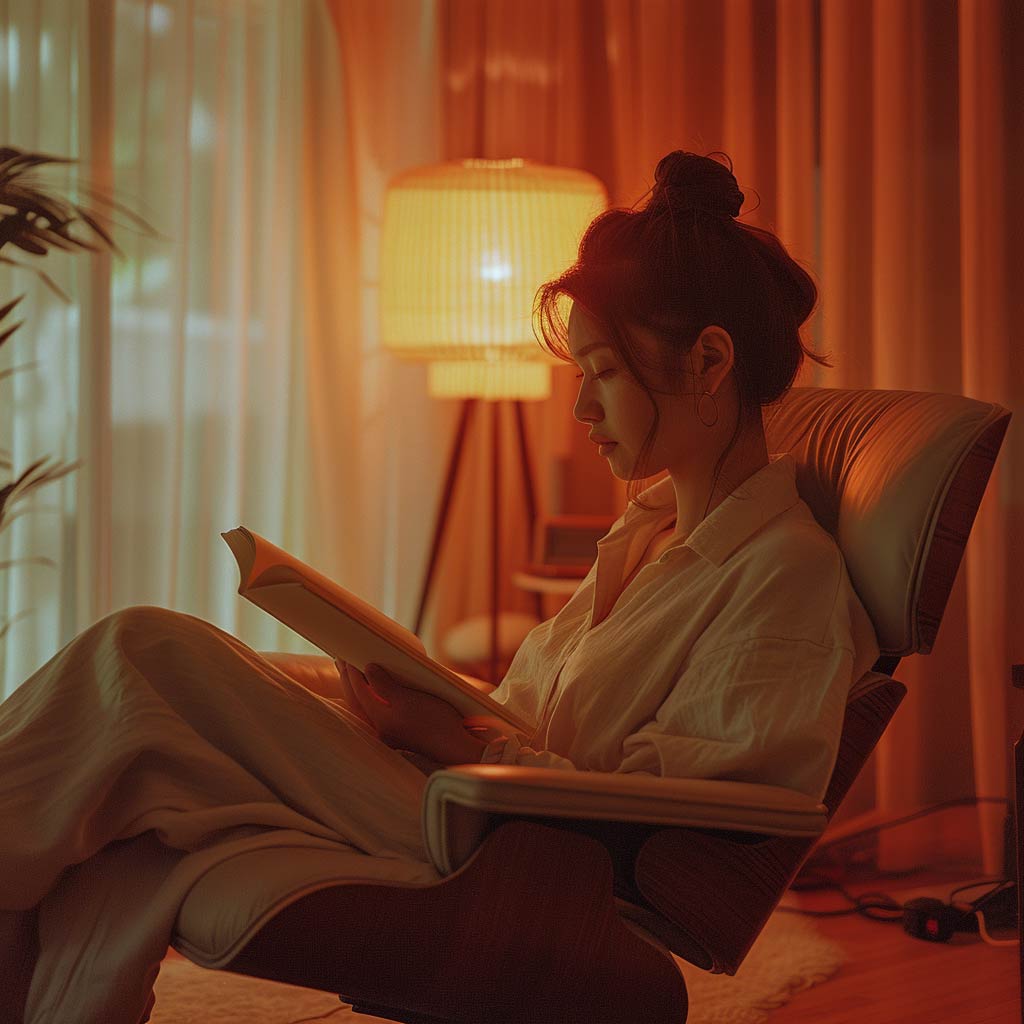
Duration. Wear them through screens, reading, and general evening activity, then take them off once you get into bed. There's no blue light left to block once you're lying down and not looking at anything, and the amber tint can be more of an annoyance than a help once your brain has already shifted into sleep mode.
Integration with your evening routine
A simple sequence:
- 10pm: put on glasses
- 10pm to 10:45pm: wind-down: reading, journaling, gentle stretching, dim lighting
- 10:45pm: remove glasses, get into bed
- 11pm: sleep onset, usually within 15 to 30 minutes if the routine is consistent
Common mistakes and timeline to results
Common mistakes:
- Putting them on too close to bedtime, leaving no time for melatonin to build
- Keeping them on in bed
- Wearing them inconsistently, which resets your circadian timing rather than reinforcing it
- Wearing them under bright overhead lighting, which can overwhelm the benefit
- Expecting a result on night one instead of after several nights of consistent use
Timeline to results:
- Nights 1 to 3: often no noticeable change, your body is calibrating
- Nights 4 to 7: most people report easier sleep onset and better sleep quality
- Weeks 2 to 4: improvements stabilise into a more predictable pattern
- Week 4+: part of the routine, no longer something you think about
Wearing them 4 nights out of 5 beats not wearing them at all, but consistent nightly use outperforms sporadic use by a wide margin.
What's the Best Soma Glasses Style for You?
All three are amber tinted glasses underneath: the same amber lens technology, 100% blue light blocking (400 to 500nm), the same $74.95 price, and the same 60-day money-back guarantee. The only difference is frame design, so pick based on what you'll actually put on every evening.
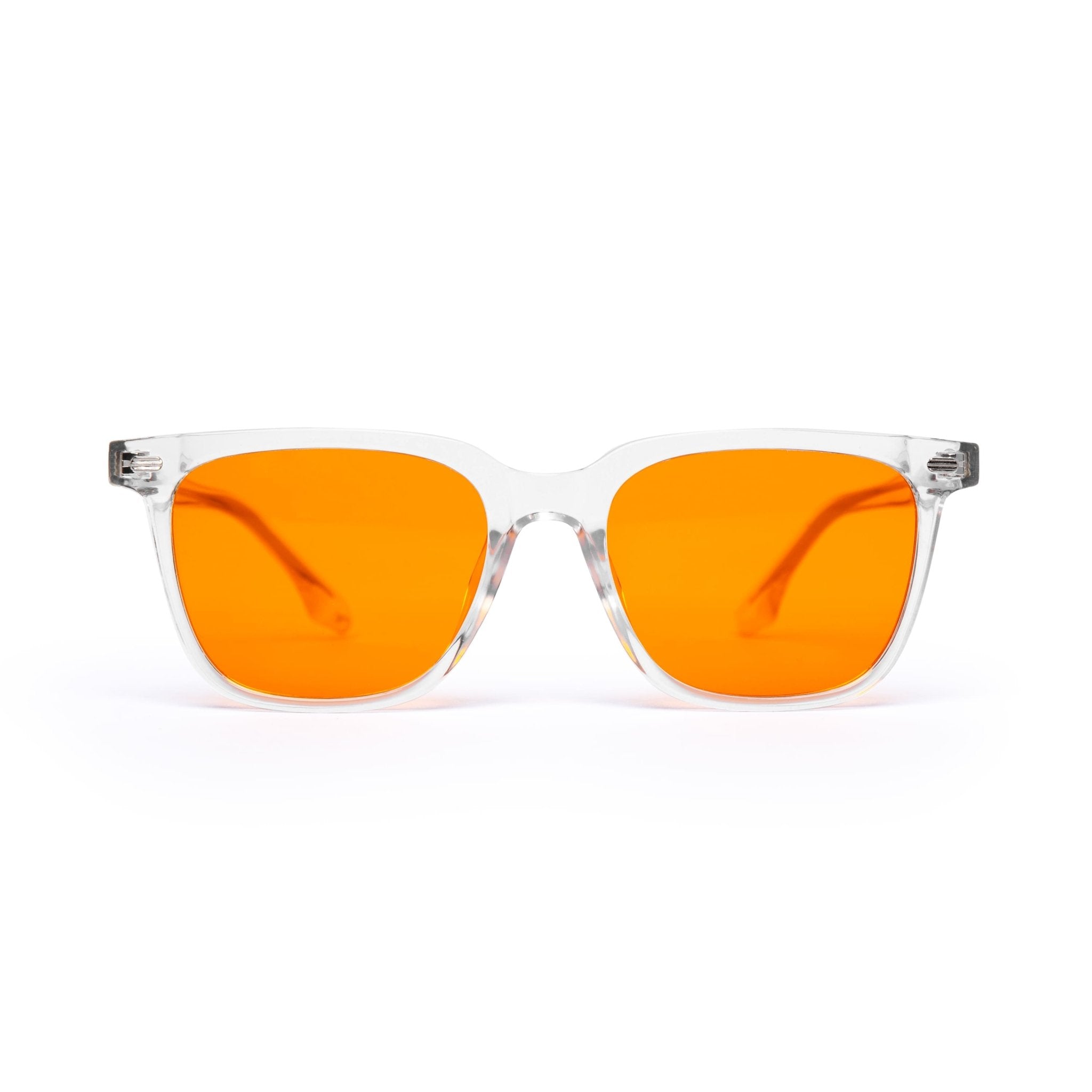
Soma Edge: Bold, Contemporary Full Frames
Full acetate frame, bold proportions, multiple colour options. Best for people who like a statement frame or don't mind a visible look.
Who wears it: tech professionals, designers, anyone comfortable with visible eyewear.
Wear it if: you want a premium-looking frame that reads as intentional, not an afterthought.
Shop Soma Edge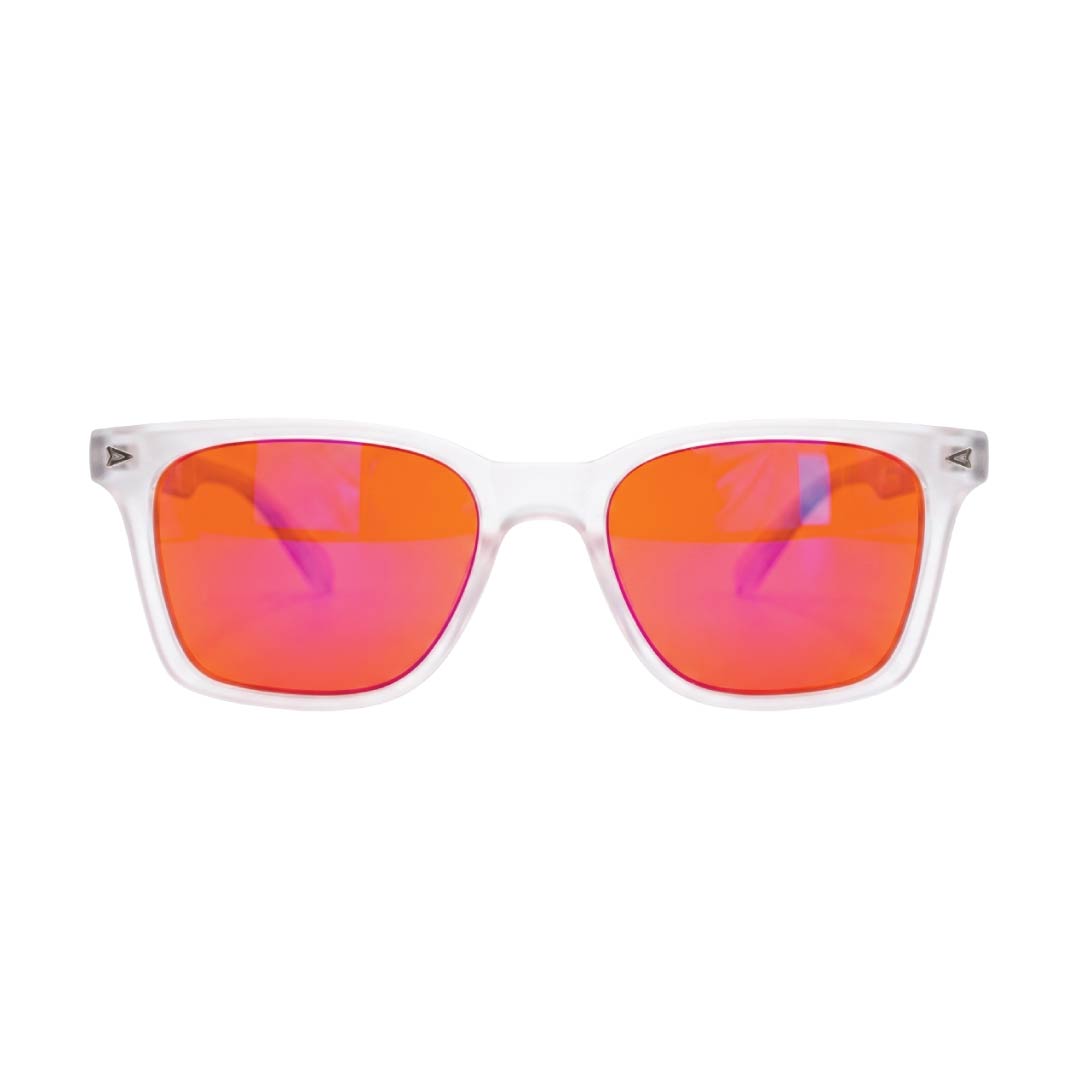
Soma Frost: Frosted Clear, Minimalist
Frosted clear acetate with refined stainless steel hinges. Nearly invisible at a glance, though the amber lens is still obvious if someone looks closely.
Who wears it: minimalists, professionals, people who want the benefit without a bold look.
Wear it if: you want the amber lens working for you without the frame drawing attention.
Shop Soma Frost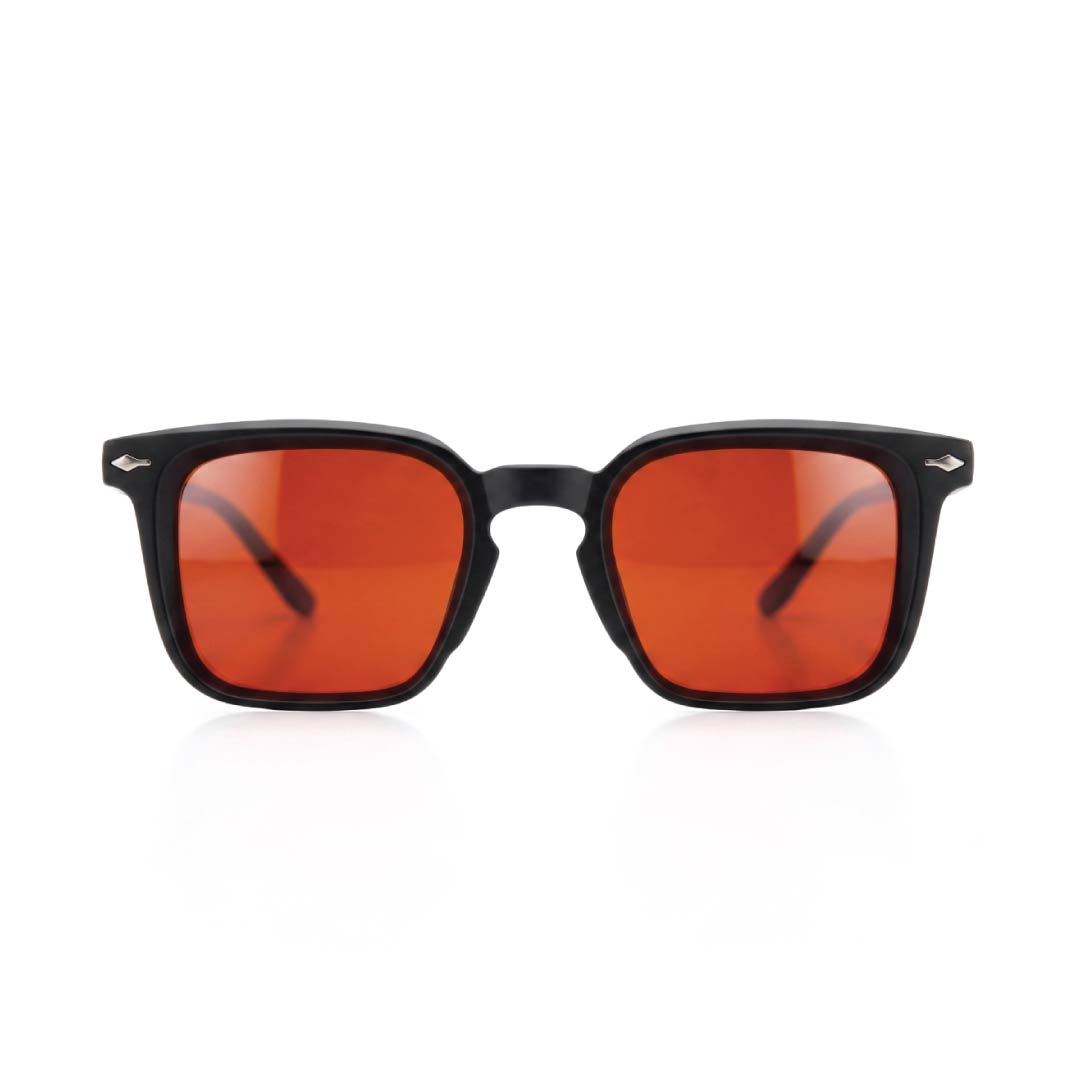
Soma Dusk: Classic Black Full-Rim, Timeless
Black acetate, classic proportions. Reads as ordinary glasses, just with amber lenses.
Who wears it: people who prefer a traditional eyewear look.
Wear it if: you want something that won't feel dated in a few years.
How to choose: if you're unsure, start with the glasses you already wear, or would wear, and match that aesthetic. All three are built the same underneath: premium acetate, stainless steel hinges, durable enough for years of daily use.
Shop Soma DuskThe Other Four Ways to Reduce Blue Light Exposure
Glasses cover one part of the picture. Here's how amber bulbs, red night lights, screen habits, and darkness fit around them. Think of it as three levers: personal (glasses, blocking blue light at your eyes), environmental (amber bulbs and red night lights, removing blue light from the room itself), and behavioural (screen habits and dimming, reducing how much light you're exposed to in the first place). Pulling one lever helps. Pulling several compounds.
Glasses + amber bulbs
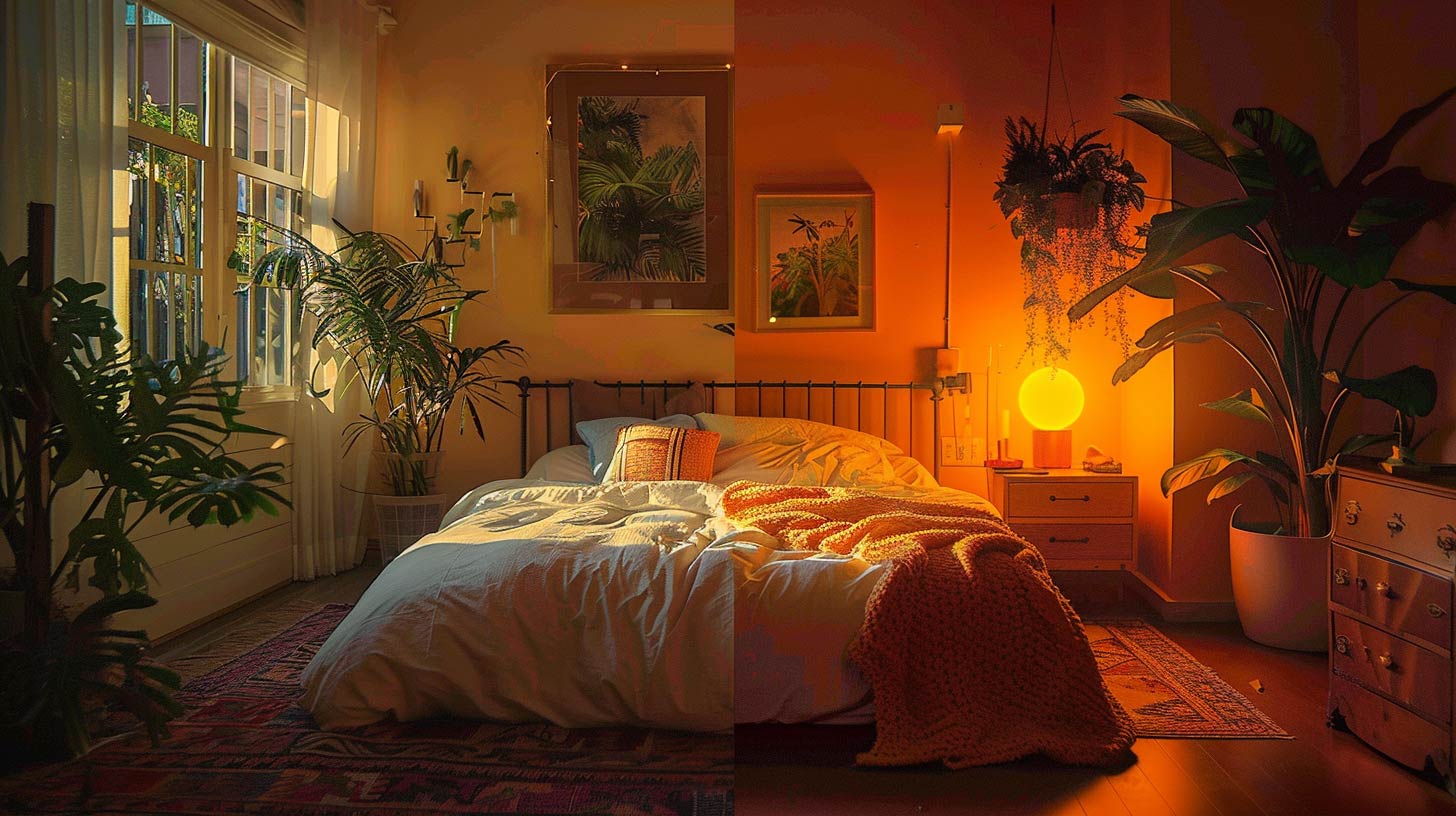
Glasses protect your eyes while you're actively using screens or reading. Amber bulbs cover the room itself, so if you take your glasses off for a minute, get up, answer the door, the overhead light in the room still isn't sending a blue-light signal. Together, you're not depending on the glasses being on your face at every single moment for the room to still support sleep.
Shop the sleep lighting range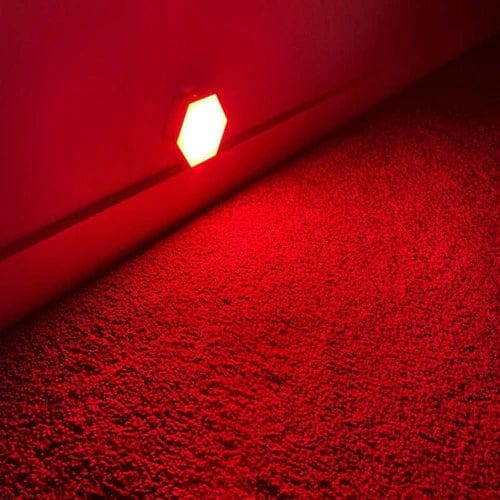
Glasses + red night lights
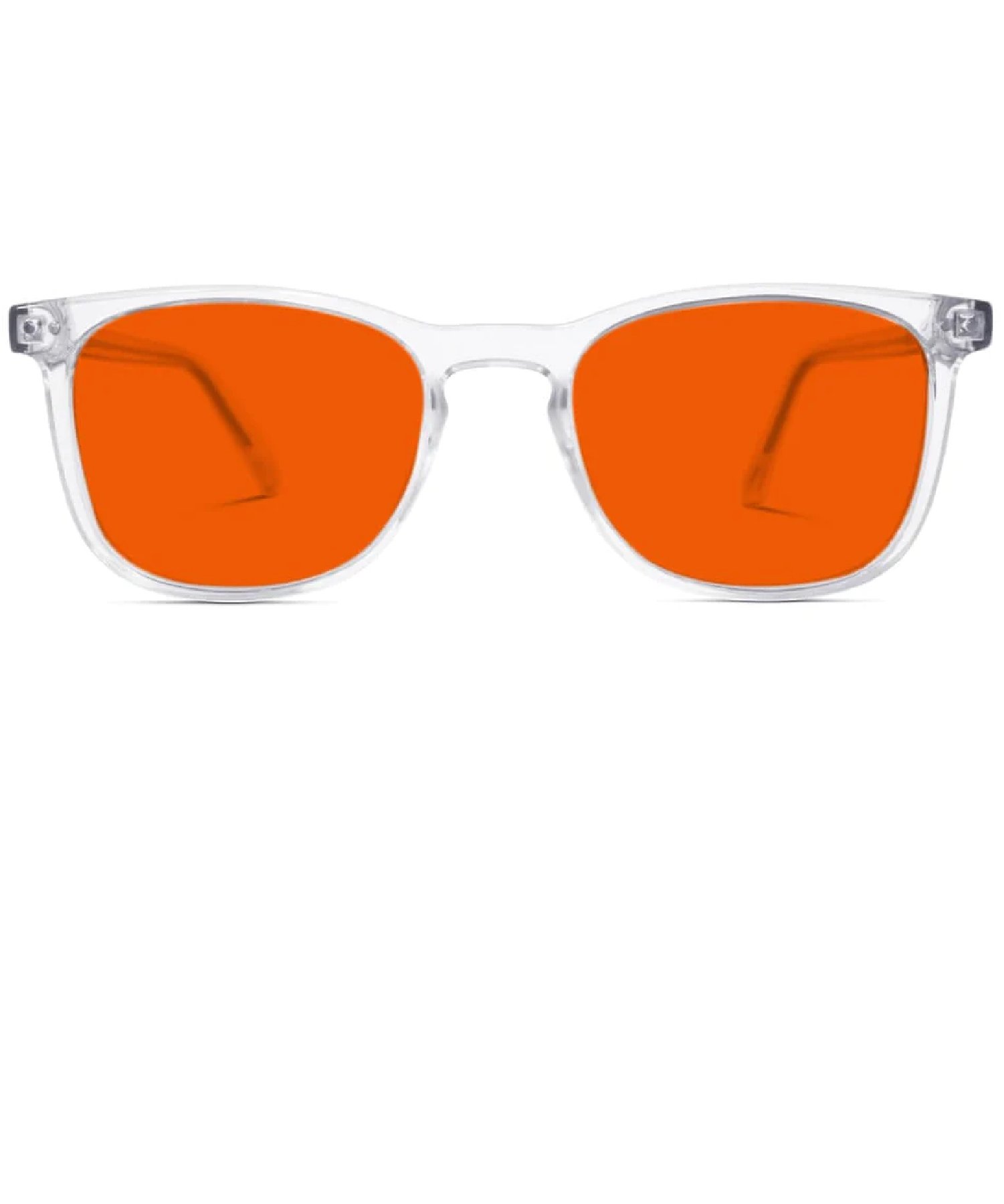
Amber bulbs handle the rooms you're actively in before bed. Red night lights handle the moments you didn't plan for: a middle-of-the-night bathroom trip, checking on a child, letting the dog out. Soma's motion-activated red night light runs at 80 lumens, enough to see where you're going without needing full brightness or a blue-heavy light source to wake you up in the process. You're not going to put glasses on for a 20-second trip down the hallway. A red light that's already there covers that gap instead.
Shop the motion-activated red night light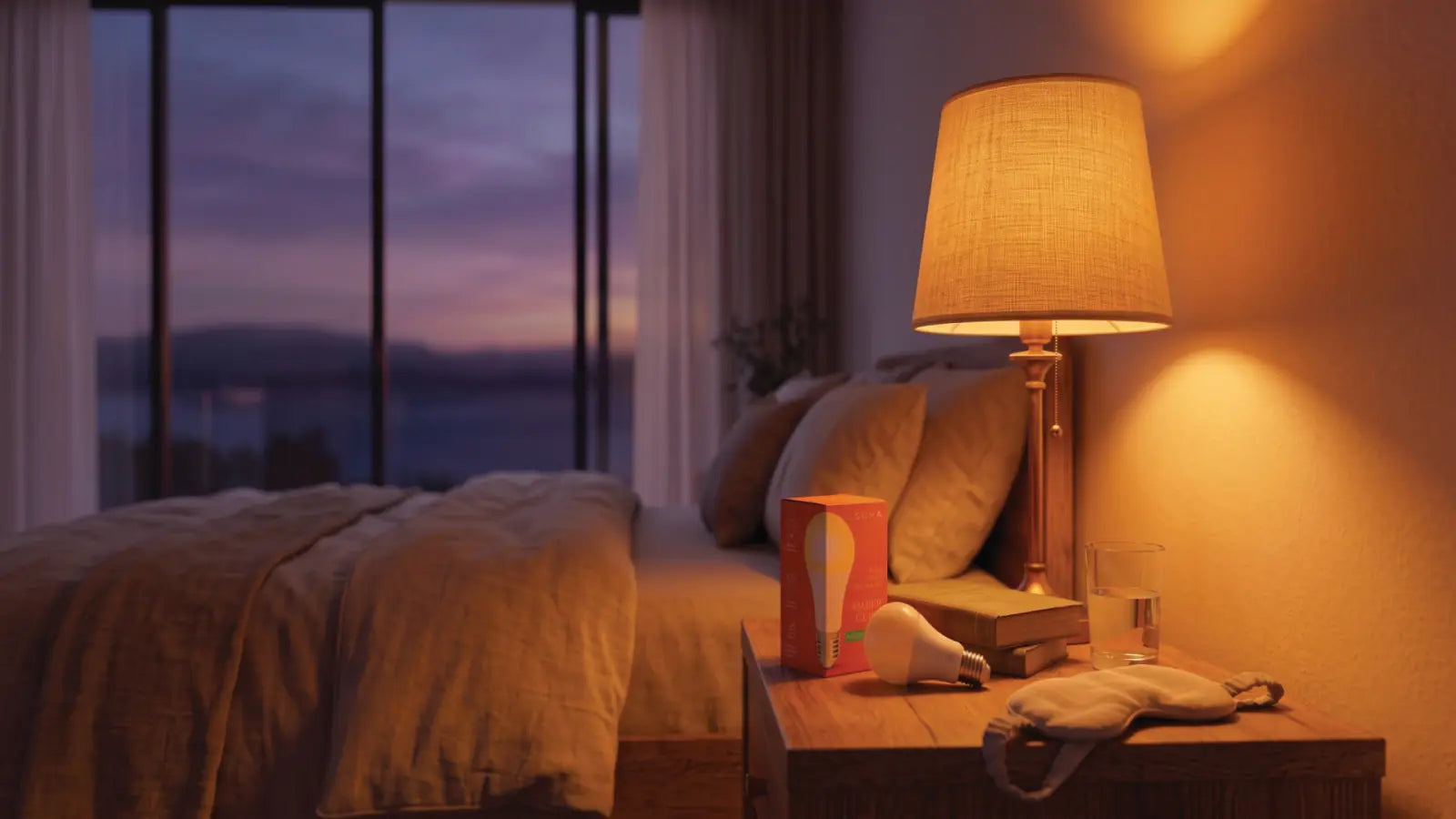
Glasses + screen habits
Glasses reduce the light itself, but a screen is still a screen: it holds your attention, delivers notifications, and keeps you cognitively engaged, none of which help you wind down on their own. For the best result, wear glasses while using screens in the evening, turn on night mode or warm colour temperature on your devices as a second layer, and still aim to put screens away 30 minutes before bed where you can manage it. Glasses plus night mode plus reduced screen time is the strongest combination. Glasses alone address the light. They don't address the stimulation.
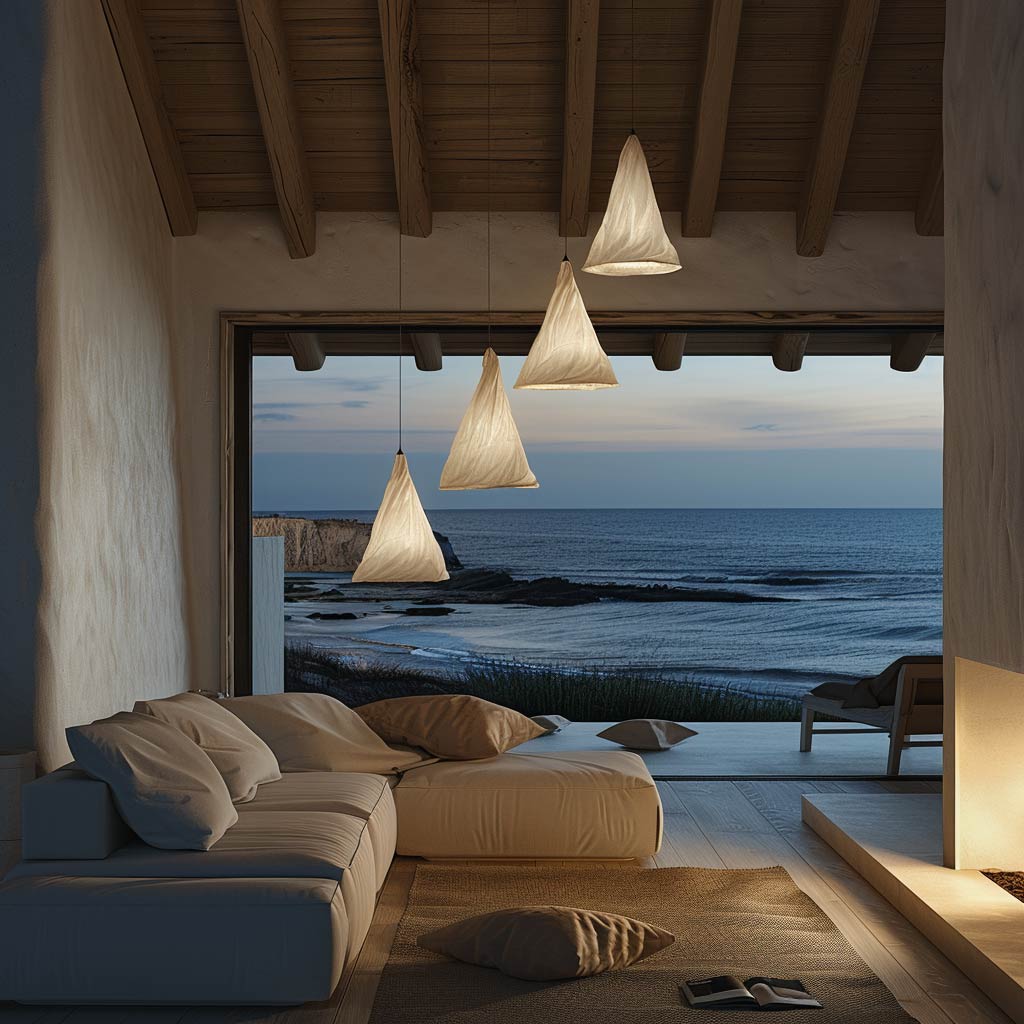
A complete sleep environment, and what to implement first
None of this needs to happen at once, and you don't need every item on this list to notice a difference, but this is roughly what a fully blue-light-managed bedroom looks like: blue light glasses 1 to 2 hours before bed, amber bulbs in the bedroom and bathroom, red night lights in the hallway and bathroom, overhead lights dimmed in the evening, blackout curtains or a sleep mask for full darkness, screens away 30 minutes before bed where possible, and a consistent bedtime.
Start with the highest-return, lowest-effort change and add from there:
- Week 1, glasses: wear them 1 to 2 hours before bed. Cost $74.95. Give it two weeks before judging the result.
- Week 3, amber bulbs: swap the bedroom and bathroom bulbs. This is usually where the improvement becomes noticeable rather than marginal.
- Week 5, red night lights: add one to the hallway or bathroom for night wakings.
- Week 7, darkness: blackout curtains or a sleep mask, if you want to go further.
Glasses alone move the needle. Glasses plus bulbs is where most people see the change worth talking about.
Shop the Amber Glow Sleep BulbFrequently Asked Questions About Blue Light Glasses
Do blue light glasses actually work? What does research show?
Yes, and it's one of the better-evidenced sleep interventions available. Three controlled trials back this: two RCTs against real placebo or control eyewear, and one against yellow-tinted (not clear) controls, all showing measurably better sleep on the amber-lens side. The mechanism is well understood, not just correlational: block the wavelength that suppresses melatonin, and melatonin rises closer to schedule. They work best as part of a routine, not as a one-off fix worn occasionally.
What's the fastest way to reduce blue light exposure without buying anything?
Turn your phone and laptop to night mode or the warmest colour temperature setting, dim overhead lights after sunset, and sit further from screens rather than closer. None of that gets you to zero, screens and LED lighting are still emitting blue wavelengths underneath the warm filter, but it takes the edge off tonight, for free. Glasses, amber bulbs, and red night lights go further because they filter or remove the wavelength itself rather than just shifting its colour balance.
Will blue light glasses work for me? What if I have a sleep disorder?
Glasses help with circadian-driven sleep problems: difficulty falling asleep, or sleep fragmented by light exposure. They aren't a treatment for sleep apnoea, narcolepsy, restless leg syndrome, or clinical insomnia. If you have a diagnosed sleep disorder, talk to your sleep specialist before relying on glasses alone.
Are there any side effects?
No adverse effects from the amber tint itself. The tint is the point, it's the visible sign that blue light is being filtered. Some people notice mild colour distortion at first, which fades as your eyes adjust over a few days, or slight eye strain if the frames don't fit well, which is a fit issue rather than a safety one.
Can I wear them if I need prescription glasses?
These are non-prescription frames. Soma doesn't offer prescription services. You can wear them over your existing prescription glasses, or use the Red Clip-on Blue Blocking Glasses, which fit over your own frames.
How do I care for my glasses?
Clean with the included microfibre cloth, store in the case when not in use, and avoid leaving them somewhere hot (a car in summer) or under pressure (don't sit on them). Lenses are scratch-resistant, not scratch-proof. Expected lifespan is 3 to 5 years with normal use.
Are these the same as computer glasses? Can I use them for work?
No, different job. Computer glasses block 50 to 80% of blue light with a light tint built to preserve colour accuracy for daytime screen work. Soma glasses block 100% with a much heavier tint, built for the evening only. Keep computer glasses for the desk and Soma glasses for after dark.
How long until I see results?
Most people notice a change within 3 to 7 nights of consistent use. A few notice sooner, some take 2 to 3 weeks. Sporadic use, some nights yes, some nights no, delays the result more than it speeds anything up.
What's your return policy?
60-day money-back guarantee. If you haven't noticed an improvement in that time, return them for a full refund.
How do blue light glasses compare to melatonin supplements?
Melatonin supplements introduce an exogenous hormone. They act quickly (30 to 45 minutes) but carry some dependency risk, and effectiveness varies person to person. Blue light glasses support your body's own melatonin production instead of replacing it, work more gradually, and don't carry that dependency risk. Most people who consistently manage their evening light exposure don't end up needing supplements. Glasses first, melatonin only if you still need it.
Do I need to wear these every single night?
Consistency matters more than perfection. Missing one night won't undo your progress, but your circadian rhythm responds to a regular signal. Wearing them five nights in a row, then skipping two, gives up some of the benefit compared with steady nightly use.
Ready to Try Blue Light Glasses?
Blue light glasses are one of the higher-return changes available for evening light exposure: put them on for an hour or two, and sleep measures can shift within days for some people, longer for others. The mechanism is straightforward. Blue light suppresses melatonin. Blocking it lets melatonin rise on schedule.
They work best alongside the rest of your sleep environment: amber bulbs where you're active before bed, red night lights for the moments you didn't plan for, and a routine you actually keep to. Start with glasses. Add bulbs after two weeks if you want to go further. Track how you're sleeping as you go.
60-day money-back guarantee. If it doesn't make a difference, send them back.